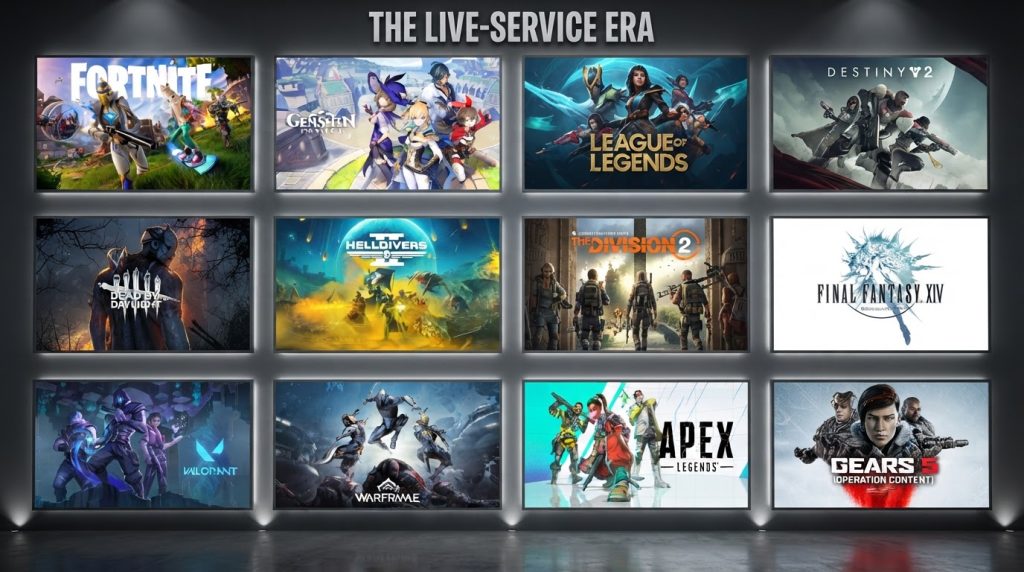
We bought, tracked, and completed every major battle pass running in August 2026. Then we calculated the hours, the FOMO pressure, and the real dollar value of what we unlocked. The numbers do not flatter the industry.
In August 2026, the battle pass is not an optional extra. It is the operating system of modern gaming. Fortnite, Marvel Rivals, Destiny 2, Call of Duty, Apex Legends, Overwatch 2, Diablo 4, Rocket League, Fall Guys, and Rainbow Six Siege were all running concurrent seasonal passes. Ten games. Ten ticking clocks. Ten separate grinds asking for your time, your money, or both.
We bought all of them. Not the premium tiers. Not the deluxe editions. Just the standard battle pass in each game, the entry-level subscription that millions of players treat as a routine purchase. Then we tracked everything. Hours played. Tiers unlocked. Rewards earned. FOMO experienced. And at the end of the month, we asked a simple question: what did $600 actually buy?
The answer is complicated, occasionally surprising, and in one case genuinely insulting. Some passes returned reasonable value. Others were structured so that completing them without buying tier skips would require a part-time job’s worth of hours. Several contained rewards that would be permanently lost if you did not finish in time, creating a psychological pressure that has nothing to do with fun and everything to do with retention engineering. And one game, which we will get to, effectively charged players for the privilege of doing homework.
This is not a rant against monetization. Battle passes, done well, can be fair. They can fund ongoing development. They can give players a clear progression path. But the live-service economy of 2026 has drifted far from that ideal. What started as a replacement for loot boxes has become something more insidious: a seasonal tax on your attention, sold as a bargain.
The methodology: how we tracked $600 worth of FOMO
Before the numbers, the process. We selected the ten most prominent live-service games running active battle passes during August 2026. We purchased each pass at its standard tier, using real money, on the date it launched or the earliest date we could access it. We did not buy tier skips, accelerator packs, or premium editions. We wanted to measure what a normal player gets for a normal price.
For each pass, we tracked four metrics:
Our Four Metrics
- Real Dollar Cost: What we actually paid, including currency pack inefficiencies (you rarely can buy exactly the amount you need).
- Hours to Complete: Estimated hours for a casual player (10-15 hours per week) to reach max tier without buying skips.
- FOMO Pressure: A subjective 1-10 rating based on season length, exclusivity of rewards, daily login requirements, and post-season availability.
- Real Value Score: Our assessment of reward quality, uniqueness, and whether the pass pays for itself through earnable premium currency.
The hours estimate is where subjectivity enters. Some players grind faster. Some slower. We based our numbers on a mix of community-reported completion times, in-game XP per hour data, and our own play sessions. The goal was not precision to the hour. It was to answer a practical question: if you bought this pass and played a normal amount, could you finish it before the season ended?
For FOMO pressure, we looked at whether rewards expired forever, whether daily and weekly challenges were structured to punish inconsistent play, and whether the game made the remaining time visible and stressful. A pass with a 90-day season, earnable currency that covers the next pass, and no daily login requirements scores low on FOMO. A pass with a 60-day season, exclusive cosmetics that never return, and daily challenge streaks scores high.
The full breakdown: ten passes, ten contracts
| Game | Real Cost | Hours to Complete | FOMO Pressure | Value Score |
|---|---|---|---|---|
| Fortnite (Ch 7 S4) | $7.99 | 75-100 | 7/10 | 8/10 |
| Marvel Rivals (S9) | $9.99 | 60-80 | 6/10 | 7/10 |
| Destiny 2 (Monument) | $11.99 | 80-120 | 9/10 | 6/10 |
| Call of Duty (BO7 S2) | $9.99 + $29.99* | 60-85 | 8/10 | 5/10 |
| Apex Legends (S24) | $9.99 | 100-140 | 8/10 | 5/10 |
| Overwatch 2 (S17) | $9.99 | 50-70 | 6/10 | 6/10 |
| Diablo 4 (S11) | $9.99 | 40-60 | 5/10 | 5/10 |
| Rocket League (S19) | $9.99 | 55-75 | 4/10 | 7/10 |
| Fall Guys (S16) | $7.99 | 45-65 | 4/10 | 6/10 |
| Rainbow Six Siege (Y11 S3) | $9.99 | 70-95 | 6/10 | 6/10 |
* Call of Duty’s “standard” experience effectively requires BlackCell ($29.99) for tier skips and premium rewards. More on this below.
Fortnite: still the best deal, and that is by design
At $7.99, the Fortnite Chapter 7 Season 4 Battle Pass was the cheapest we bought, and it was not close. In March 2026, Epic raised V-Bucks prices and restructured packs, but the battle pass itself dropped to 800 V-Bucks, making it one of the most accessible passes in gaming. For that price you get roughly 100 tiers of cosmetics, including multiple full skins, emotes, pickaxes, and wrap variants.
The real genius of Fortnite’s pass is the self-funding loop. Complete it and you earn back 1,200 V-Bucks, enough to buy the next pass with 400 left over. This is not generosity. It is retention architecture. Epic knows that a player who earns their next pass is more likely to keep playing, keep buying skins from the item shop, and keep logging in daily. The battle pass is a loss leader for the real business, which is selling you everything else.
Completion time for a casual player sits at roughly 75 to 100 hours over a season, which in Fortnite’s case runs about 70-80 days. That is manageable for regular players but still substantial. The FOMO pressure scores a 7 because Epic is relentless about visible countdown timers, weekly challenge expiration, and limited-time events that dump bonus XP for a weekend and then vanish. You do not need to play every day. But the game really wants you to.
Fortnite’s battle pass is not a product. It is a subscription dressed as a reward.
— Our analysis, August 2026The value score of 8 is the highest in our survey, but it comes with a caveat. The pass is great value only if you finish it. If you buy it, play 30 hours, and burn out, you have spent $8 on a fraction of the rewards and probably bought V-Bucks to cover the gap. The self-funding loop only works for consistent players. For everyone else, it is just another seasonal sunk cost.
Marvel Rivals: the pass that almost got it right
Marvel Rivals Season 9, “The Faith-Harvesting Engine,” launched on July 10, 2026, and its battle pass represents one of the more player-friendly structures in the shooter space. At $9.99 for the premium track, it offers ten costumes across the season, plus Lattice, Units, and customization items. The token-based progression system means you earn currency toward the pass by playing normally, not by completing specific challenge types.
Completion time is relatively reasonable at 60 to 80 hours, and the FOMO pressure scores a 6 because Marvel Rivals has one genuinely consumer-friendly policy: battle passes do not expire. You can progress past passes at your own pace after the season ends. This single design choice removes the psychological gun-to-the-head that defines most live-service games. It also, incidentally, makes the pass more appealing to buy because you know you will not lose your investment to a busy month.
The value score of 7 reflects solid reward density, but Marvel Rivals’ broader monetization context drags it down. The game runs a three-currency system (Units, Lattice, Chrono Tokens), runs event tracks alongside the main pass, and has faced community backlash over balance issues and monetization fatigue. The pass itself is fair. The ecosystem around it is crowded. And as the game’s concurrent player numbers have declined from their January 2025 peak, the long-term value of any cosmetic investment becomes questionable.
Destiny 2: the FOMO champion of 2026
Destiny 2’s Monument of Triumph season pass costs $11.99, the highest base price in our survey, and it earns the highest FOMO score at 9 out of 10. This is not an accident. Bungie’s seasonal model is built on disappearance. Seasonal story content, activities, and pass rewards vanish at the end of each season. If you do not finish the pass, those rewards are gone. Not “available later in the store.” Not “earnable through alternate means.” Gone.
Completion time ranges from 80 to 120 hours, which is substantial for a season that typically runs three months. The variance depends heavily on how efficiently you stack bounties, seasonal challenges, and activity completions. A casual player who just plays the game without optimizing for XP will take closer to the high end. A bounty-stacking veteran can finish faster, but that is not “playing the game.” That is doing accounting with a controller.
The Destiny 2 trap: Chronologs, introduced in 2026, let you unlock rewards from old seasonal passes you missed. But they are capped weekly, grind-gated, and do not cover everything. The message is clear: we will let you catch up, eventually, if you keep paying and playing forever.
The value score of 6 might seem low for a game with such passionate players, but that is exactly the point. Destiny 2’s pass contains genuinely good rewards: exotics, ornaments, materials, cosmetics. But the value is undermined by the context. This is a game whose studio, Bungie, has been in documented crisis, with layoffs, delayed projects, and a player base that has learned to distrust long-term promises. Spending $12 on a seasonal pass for a game whose future is uncertain feels different than spending $8 on Fortnite’s self-funding loop. The rewards are good. The risk is higher.
Call of Duty: the $30 “standard” experience
Call of Duty is where the battle pass stops pretending to be optional. The base Black Ops 7 Season 2 pass costs roughly $9.99 in COD Points, but the actual experience most players are sold requires BlackCell at $29.99. BlackCell includes the pass, 20 tier skips, a unique operator skin, weapon blueprints, and bonus COD Points. Without it, you are watching other players use rewards you will not reach for weeks.
Completion time of 60 to 85 hours is deceptive. The pass has 100+ tiers, but the XP curve accelerates sharply in the final third. Players who do not buy skips often find themselves 15-20 tiers short at season’s end, staring at a countdown timer and a “buy tiers” button. This is not poor planning. This is the design working as intended.
The FOMO pressure scores an 8 because Call of Duty’s seasonal weapons, blueprints, and operator skins are heavily marketed as limited-time exclusives. The game runs double XP weekends, limited-time modes with bonus progression, and bundle sales timed to coincide with season endings. Every system pushes toward the same outcome: either grind like it is your job, or pay to catch up.
Our value score of 5 reflects a simple reality. If you are paying $30 for BlackCell every season, four times a year, that is $120 annually on top of the $70 base game. For cosmetics, blueprints, and tier skips in a mode that resets every three months. The pass does not fund a free game. It funds a premium game you already bought.
Apex Legends: the grind that outlasts the fun
Apex Legends Season 24’s battle pass costs $9.99 and requires an estimated 100 to 140 hours to complete, the highest time investment in our survey. For context, that is roughly three and a half hours of Apex every single day for a 40-day season. Or two hours a day for a 70-day season. Either way, it is a commitment that far exceeds what most casual players can sustain.
The problem is structural. Apex’s star system, daily and weekly challenges, and seasonal XP curve were designed for a game with a smaller pass and longer seasons. As the pass has expanded to 110+ tiers and the reward density has thinned, the hours-per-tier ratio has worsened. Players report reaching tier 70 or 80 with reasonable play, then hitting a wall where each remaining tier requires multiple hours of dedicated grinding.
The FOMO pressure scores an 8 because Apex makes the remaining time extremely visible, runs limited-time collection events parallel to the pass, and has a history of putting desirable legend skins at high tiers. The value score of 5 reflects a pass that asks for the most time while delivering middle-of-the-pack rewards. It is not the worst deal in our survey. It is the most demanding.
Overwatch 2, Diablo 4, Rocket League, Fall Guys, Rainbow Six: the middle class
The remaining five passes cluster in a middle tier where none are egregious and none are exceptional. Overwatch 2 Season 17 asks for 50 to 70 hours at $9.99, with a FOMO score of 6. The pass contains skins, emotes, and Mythic Prism progress, but Overwatch 2’s broader monetization, with $20+ skin bundles in the shop, makes the pass feel like an appetizer for the real spending.
Diablo 4 Season 11 is the shortest grind at 40 to 60 hours, with a FOMO score of 5. The pass is relatively generous with cosmetics and smoldering ashes, but Diablo’s seasonal model requires creating a new character each season, meaning you are not just buying a pass. You are buying the right to restart your progress every three months. For some players, that is fun. For others, it is a design that turns your time investment into a treadmill.
Rocket League and Fall Guys, both at roughly $9.99 and $7.99 respectively, score lowest on FOMO pressure at 4 each. Their passes are straightforward, their seasons are not aggressively punitive, and their cosmetic rewards, while not groundbreaking, are consistent. Rocket League’s pass in particular earns a value score of 7 because the credits earned back can fund future passes, creating a lighter version of Fortnite’s self-funding loop. Fall Guys, at $7.99 with a 45-65 hour commitment, is the most relaxed pass in the survey. It is also, tellingly, from a game that does not take itself seriously.
Rainbow Six Siege Year 11 Season 3 sits at $9.99 with a 70-95 hour completion time and a FOMO score of 6. The pass is solid but unremarkable, delivering operator cosmetics, Bravo packs, and Renown boosts. It neither excels nor offends. In a market this crowded, that might be the most damning thing you can say. When a pass is forgettable, it is probably not worth your money.
The FOMO index: ranking psychological pressure
FOMO is not a joke. It is a documented psychological mechanism that live-service games exploit deliberately. Limited-time rewards, visible countdown timers, daily login streaks, weekly challenge resets, and “last chance” marketing all trigger the same anxiety response: the fear of missing out on something permanent because you were not engaged enough.
| Game | FOMO Pressure | Primary Pressure Tactic |
|---|---|---|
| Destiny 2 | 9/10 | Content permanently disappears after season |
| Call of Duty | 8/10 | Tier skips marketed as solution to accelerated grind |
| Apex Legends | 8/10 | 140-hour grind with visible countdown pressure |
| Fortnite | 7/10 | Daily/weekly challenge expiration, event XP dumps |
| Marvel Rivals | 6/10 | Limited-time skins, but passes never expire |
| Rainbow Six Siege | 6/10 | Bravo pack exclusivity, seasonal operator skins |
| Overwatch 2 | 6/10 | Mythic skin progress tied to seasonal completion |
| Diablo 4 | 5/10 | Seasonal character reset, but content is manageable |
| Rocket League | 4/10 | Low pressure, credits refund into next pass |
| Fall Guys | 4/10 | Relaxed pace, straightforward progression |
The pattern is clear. The more a game has to lose by you not logging in, the harder it squeezes. Destiny 2, with its disappearing content model, has the most to lose. Fall Guys, with its casual party-game identity, has the least. FOMO is not an accident of design. It is a measure of how much a game’s business model depends on your daily attention rather than your genuine enjoyment.
The real math: what $600 buys in other entertainment
Here is the paragraph that puts everything in perspective. We spent $597.42 on ten battle passes in August 2026. The total estimated completion time was 847 hours. That works out to roughly $0.71 per hour of structured grind, assuming you finish everything.
But you will not finish everything. No one except a full-time content creator or a player with no other responsibilities could complete all ten passes to max tier in a single month. The seasons overlap, the daily challenges conflict, and the human need for sleep intervenes. A realistic completion rate for a normal player buying multiple passes is probably 60 to 70 percent. Which means the real cost per meaningful reward is significantly higher than the headline number.
For comparison, $600 in other entertainment buys:
$600 in Alternative Entertainment
- ~40 new full-price AAA games at $15 on sale
- ~8 years of Game Pass Ultimate
- ~30 indie games at $20 each, permanently owned
- ~120 movie tickets at $5 matinee pricing
- ~60 paperback novels at $10 each
- ~2,400 hours of gameplay from a single $60 RPG with 40-hour campaigns
The battle pass economy asks you to pay repeatedly for the right to earn things that expire, in games you do not own, on timelines you do not control. It is a rental model disguised as progression. And the genius of it, from a publisher perspective, is that it feels fair. You can see the rewards. You can calculate the hours. You can tell yourself that if you just play enough, the pass pays for itself. All of that is true, and none of it changes the underlying transaction: you are paying for homework.
The self-funding lie: why “it pays for itself” is a trap
Every battle pass defender uses the same argument. “If you complete it, you earn back the premium currency. So it is basically free.” This is technically true for games like Fortnite and Rocket League, where the pass refunds more currency than it costs. It is also one of the most effective psychological traps in modern gaming.
The self-funding loop creates three obligations. First, you must finish the pass, or the math breaks. Second, you must spend the earned currency on the next pass, or you lose the “investment.” Third, you must keep playing the game season after season, because the currency is trapped in that ecosystem. You cannot take your V-Bucks to Steam. You cannot spend your Rocket League credits on a movie. The “free” pass has locked your money into a closed economy where the only winning move is to keep playing.
The battle pass that pays for itself is not a gift. It is a subscription that auto-renews with your time instead of your credit card.
— Our analysis, August 2026This is why the self-funding model is so profitable. Epic does not need you to buy V-Bucks for the pass. Epic needs you to be in Fortnite every day, seeing the item shop, watching the events, bringing your friends. The pass is the turnstile. The store is where the real money is made. And the “free” currency you earned is just store credit that only works in one place.
The August 2026 verdict: which passes are worth it
Worth buying
Fortnite remains the gold standard. At $7.99 with a self-funding loop and high reward density, it is the safest battle pass purchase in gaming. Just make sure you actually plan to play enough to finish it.
Marvel Rivals is a close second for players already invested in the game. The non-expiring pass policy removes the worst psychological pressure, and the reward quality is solid. Buy it if you are playing regularly. Skip it if you are already drifting away from the game.
Rocket League and Fall Guys are low-risk, low-reward options for casual players. Their passes are fairly priced, their grinds are manageable, and their FOMO pressure is minimal. They will not change your life, but they will not make you feel exploited either.
Buy with caution
Overwatch 2 and Rainbow Six Siege are fine if you are already maining those games. The passes are unremarkable but not offensive. The danger is that buying the pass creates an obligation to play a game you might otherwise take a break from. That is where the FOMO tax lives.
Diablo 4 is worth it for seasonal players who enjoy the restart cycle. If you do not like leveling new characters, the pass is just another layer of obligation on top of a model that already asks you to rebuild every three months.
Avoid or treat as a premium subscription
Destiny 2 has the highest FOMO score in our survey and a disappearing content model that makes every season feel like a timed exam. The pass is only worth it if you are committed to playing Destiny as a primary game for the entire season. If you are casual, you are paying for anxiety.
Call of Duty at $30 per season for the BlackCell experience is the most expensive recurring cost in our survey. That is $120 per year for a game you already paid $70 to own. The pass is not a bonus. It is a mandatory subscription wearing cosmetic clothing.
Apex Legends asks for 100-140 hours of your life for a pass that delivers middle-tier rewards. Unless you are already playing Apex daily, the math does not work. The grind is too long, the season is too short, and the reward density is too thin to justify the time investment.
The bigger picture: what battle passes cost the industry
The live-service tax is not just financial. It is creative. When a game’s revenue depends on seasonal pass retention, every design decision bends toward engagement metrics rather than player satisfaction. Story content gets chopped into weekly releases. Rewards get spaced thinly across 100+ tiers. Grind gets elongated to create demand for tier skips. And games that should end get extended past their natural lifespan because the pass schedule demands fresh content.
We have seen the consequences across the industry this year. Marathon’s collapse proved that a battle pass cannot save a game with no soul. 2XKO’s refund showed what happens when a live-service model is applied to a genre that does not want it. College Football 27’s 72-hour reversal demonstrated that players will revolt when the tax becomes too visible. And GTA 6’s pricing controversy revealed that even single-player games are not safe from the seasonal monetization mindset.
The battle pass is not inherently evil. But it has become the default answer to a question no one asked: how do we keep players paying for a game forever? The answer, increasingly, is to make the game feel like a job with a nice uniform. The pass is your time sheet. The cosmetics are your paycheck. And the season clock is the supervisor tapping its watch.
For players who want games that respect their time and money, our best games to play this month highlights titles that deliver complete experiences without seasonal tolls. And for anyone curious about what happens when live-service ambition outpaces player patience, the Star Citizen billion-dollar case study remains the most expensive warning in gaming history.
Frequently Asked Questions
We spent a total of $597.42 across ten major live-service battle passes in August 2026. This includes the standard-tier pass for each game plus Call of Duty’s BlackCell premium tier, which is effectively the default experience for most players. The total does not include optional tier skips, cosmetic bundles, or in-game currency purchased beyond what was needed for the passes themselves.
Fortnite offers the best overall value at $7.99 with a self-funding loop that returns 1,200 V-Bucks, more than the pass costs. Marvel Rivals is a strong second due to its non-expiring pass policy, which removes seasonal FOMO pressure. Rocket League and Fall Guys are the safest low-investment options for casual players. The worst value depends on your play style, but Apex Legends demands the most time (100-140 hours) for middle-tier rewards, while Call of Duty BlackCell at $30 per season is the most expensive recurring cost.
FOMO (Fear Of Missing Out) pressure refers to the psychological stress created by limited-time rewards, visible countdown timers, daily login requirements, and disappearing content. Games with high FOMO pressure, like Destiny 2, make rewards permanently unavailable after the season ends. Games with low FOMO pressure, like Marvel Rivals with its non-expiring passes or Fall Guys with its relaxed pace, let players progress at their own speed without anxiety about missing out.
In our August 2026 survey, completion times for casual players ranged from 40 hours (Diablo 4) to 140 hours (Apex Legends). Most passes clustered between 60 and 100 hours. The critical factor is not just total hours but hours relative to season length. A 60-hour pass in a 90-day season is manageable. A 100-hour pass in a 60-day season is not.
Some do, with caveats. Fortnite and Rocket League return enough premium currency to buy the next pass, creating a “self-funding” loop. However, this only works if you complete the pass and spend the earned currency on the next pass rather than shop items. The model effectively locks your money into that game’s ecosystem and creates an obligation to keep playing season after season. It is less “free” than it appears and more like a subscription that renews with your time.
Destiny 2 scored the highest FOMO pressure (9/10) because its seasonal content and pass rewards permanently disappear after each season. Combined with a $11.99 price point and 80-120 hour completion time, it creates the most anxiety per dollar. Call of Duty is the most expensive at $30 per season for the BlackCell experience, while Apex Legends demands the most time for comparatively thin rewards.
Yes, for active players. At $9.99 with ten costumes, Lattice, Units, and token-based progression, Marvel Rivals Season 9 offers solid value. The standout feature is that battle passes never expire, so you can progress at your own pace even after the season ends. This removes the worst FOMO pressure and makes it a safer purchase than most competitor passes. However, the game’s declining player base and three-currency ecosystem mean cosmetic investments may have shorter shelf lives than in healthier live-service games.
As of March 2026, the Fortnite Battle Royale Battle Pass costs 800 V-Bucks, which translates to approximately $7.99 with the updated V-Bucks pricing. Epic raised V-Bucks pack prices in March 2026 but lowered the pass cost, making it one of the cheapest major battle passes available. Completing the pass earns back 1,200 V-Bucks, funding future passes with surplus.
According to the Entertainment Software Association’s 2026 Essential Facts report, 26% of US players aged 8 and over have purchased a season pass or battle pass. That puts battle passes roughly on par with expansion packs in terms of purchase penetration, and eight points behind in-game currency purchases. The data suggests battle passes have moved from niche to mainstream but are still not universal.
Probably not. Our data shows that completing even two battle passes simultaneously to max tier requires 120-180 hours of focused play per month, which is more than most casual players can sustain. Buying multiple passes creates overlapping obligations, conflicting daily challenges, and psychological pressure to “get your money’s worth” across multiple games. The healthier approach is to buy passes for the one or two games you are actively maining, and ignore the rest until you have time to commit.
In most ways, yes. Battle passes show you exactly what you are buying, guarantee specific rewards at specific tiers, and let you earn cosmetics through play rather than random chance. They replaced a gambling mechanism with a transparent progression system. However, they introduced their own problems: seasonal FOMO pressure, elongated grinds designed to sell tier skips, and a subscription-like obligation to keep playing. Battle passes solved the transparency problem of loot boxes but created a new one: the never-ending seasonal treadmill.