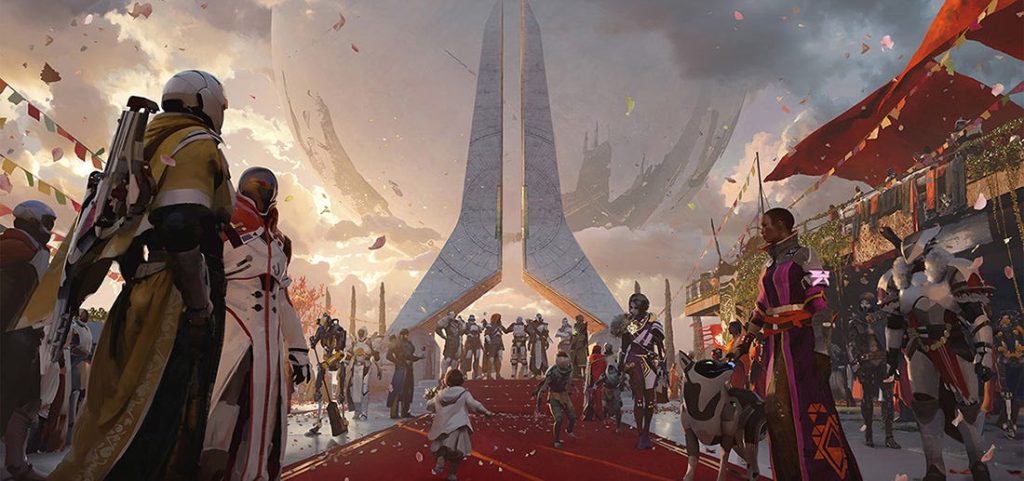
How the studio that made Halo and Destiny lost three franchises, nearly a billion dollars of Sony’s money, and the generational talent that built its reputation. Bad luck, bad management, or something deeper?
In January 2022, Sony paid $3.6 billion for Bungie. The pitch was simple: acquire the studio that invented the modern live-service shooter, plug its expertise into PlayStation’s expanding multiplayer ambitions, and watch the recurring revenue roll in. Pete Parsons, Bungie’s CEO, reportedly told Sony that multiple live-service games were in the pipeline. Destiny was the foundation. Marathon was the future. And somewhere in the incubation labs, new universes were waiting to be born.
Four years later, the picture looks catastrophically different. Destiny 2 has lost 91% of its players since its last expansion and active development has ended. Marathon, Bungie’s first new IP in over a decade, hemorrhaged 96% of its Steam peak within five months of launch and briefly dipped below 1,000 concurrent players. Project Payback, a Destiny spinoff once positioned as the bridge to the franchise’s next era, was cancelled before it ever saw a public trailer. Sony has written down $969 million of the acquisition, nearly 30% of the purchase price, with more likely to come.
And the games are only part of the story. Between 2023 and 2026, Bungie shed hundreds of developers through three distinct waves of layoffs. Luke Smith left. Mark Noseworthy left. Joe Ziegler left. Christopher Barrett left. Carrie Gouskos left. Justin Truman lasted less than a year as studio head before quitting. The entire Destiny 2 sandbox team was wiped out. The cinematic org was eliminated. Veterans who had been at Bungie since the Halo era posted LinkedIn goodbyes like obituaries for a dying company.
This is not a story about one bad game, or one disappointing expansion, or one rough launch. This is a pattern. Three games. Three different types of failure. One underlying cause. And a warning to every studio that thinks live service success is a formula you can buy.
What did Sony actually buy in 2022?
To understand the collapse, you have to understand the pitch. When Sony acquired Bungie for $3.6 billion, it was not just buying Destiny 2. It was buying what Pete Parsons sold as a live-service factory: a studio with the infrastructure, talent, and institutional knowledge to reliably produce and operate multiple ongoing multiplayer games. The deal was the linchpin of Sony’s announced strategy to shift a huge portion of PlayStation Studios’ budget toward live service titles.
At the time, this looked rational. Destiny 2 was coming off The Witch Queen, one of its best-received expansions ever. The Final Shape was already in development and promised to deliver the long-awaited conclusion to the Light and Darkness saga. Marathon, though early, was a known quantity with a revered IP and an experienced team. And behind closed doors, incubation projects like Payback, Gummybears, and Team LFG suggested Bungie was not a one-franchise studio.
What Sony Thought It Was Buying
- Destiny 2: A proven live-service cash cow with years of content ahead.
- Marathon: A new extraction shooter IP from the team that defined the genre.
- Incubation pipeline: Multiple live-service projects in development, diversifying beyond Destiny.
- Institutional expertise: The people who built Halo and Destiny, with deep knowledge of shooter mechanics and community management.
- Recurring revenue: Season passes, expansions, and cosmetic stores across multiple titles.
What Sony actually got was almost the opposite. Destiny 2’s trust was shattered by Lightfall before the ink on the acquisition dried. The incubation pipeline produced nothing but cancelled projects and reassigned teams. Marathon arrived four years late, in a saturated extraction shooter market, without the leadership that had originally pitched it. And the institutional expertise walked out the door, voluntarily or otherwise, in waves.
Collapse One: How Destiny 2 lost 91% of its players
Destiny 2’s decline did not start in 2026. It started on February 28, 2023, the day Lightfall launched. That expansion sits at 29% positive on Steam from over 12,000 reviews. Not “Mixed.” Not “controversial.” Near-unanimous rejection from the people who cared enough about Destiny to pay for an expansion and then write a review specifically to warn others away.
Lightfall’s failures are well documented. The campaign was incoherent, introducing a new Neptune storyline that felt disconnected from the apocalyptic narrative momentum The Witch Queen had built. The Cloudstrider characters were underdeveloped. The Witness, built up for years as the ultimate cosmic threat, was handled in ways that made the saga feel smaller, not larger. The Strand subclass was poorly balanced at launch. And the seasonal content model, which asked players to buy an expansion and then pay again for seasonal passes on top, had finally exhausted community goodwill.
But the real damage was not any individual flaw. It was the message Lightfall sent: Bungie was no longer listening. Years of feedback about the content vault, the new player experience, the convoluted purchase model, and the grind had gone unaddressed. Lightfall felt like a studio that had decided it knew better than its players. The 29% rating was the community’s reply.
The Final Shape in June 2024 was a genuine return to form, scoring 79% positive and delivering an emotionally resonant conclusion to the saga. But it was a funeral with good music. The players who had left did not all come back. And the ones who did return saw Luke Smith and Mark Noseworthy, the creative leadership behind the turnaround, depart shortly after. The narrative momentum The Final Shape rebuilt was not sustained. Edge of Fate, the next expansion, launched in July 2025 to the lowest day-one Steam peak in Destiny history, struggling to crack 100,000 concurrent players when previous expansions had guaranteed 300,000+.
| Expansion | Steam Rating | What Happened |
|---|---|---|
| Shadowkeep | 54% Mixed | First warning sign, but player base held |
| Beyond Light | 69% Mixed | Stasis was fun, but content vault anger grew |
| The Witch Queen | 88% Very Positive | Peak creative and commercial trust |
| Lightfall | 29% Mostly Negative | Trust shattered; the exodus began here |
| The Final Shape | 79% Very Positive | Return to form, but too late for many |
| Edge of Fate | Declining | Lowest expansion peak ever; 91% player loss follows |
By March 2026, Destiny 2’s Steam concurrent count had fallen below 10,000, a 91% collapse from Edge of Fate’s launch numbers. The final live service update on June 9, 2026, Monument of Triumph, briefly spiked numbers back above 160,000 as players logged in to say goodbye. Then the layoffs came. And the realization set in: Destiny 2 was not hibernating. It was finished.
Collapse Two: Marathon’s 96% death spiral
If Destiny 2’s collapse was a slow burn, Marathon’s was a cliff dive. Bungie’s extraction shooter reboot launched on March 5, 2026, after years of delays, leadership changes, and internal pessimism. It peaked at 88,337 concurrent players on Steam within six hours. By August, it had fallen below 4,000. At its worst, it briefly dipped under 1,000. That is not attrition. That is evaporation.
The warning signs were visible years earlier. In August 2024, Bloomberg’s Jason Schreier reported that sentiment around Marathon at Bungie was “not great” and that staff were pessimistic about hitting deadlines. The game had already slipped a full year. Directors Christopher Barrett and Carrie Gouskos had left the project. In May 2025, Bungie was forced to delay content to remove plagiarized art assets that had slipped into the Alpha. The indefinite delay announcement in June 2025, just months before the scheduled September launch, was framed as “listening to feedback.” Players heard: we are not ready and we have been pretending we were.
When Marathon finally arrived, it was not the disaster some had predicted. Reviews were solid, around 85% positive on Steam. The problem was retention. In a market already brutalized by extraction shooters, Marathon offered neither the depth of Escape from Tarkov nor the accessibility of ARC Raiders. The Vault Breakers PvE update in July caused a brief spike to 14,771 concurrent players, but the decline resumed immediately after. By August, the game was being compared unfavorably to its own death watch.
There’s a reason that it was planned for this year and slipped a whole year, and people that I’ve talked to are a little pessimistic about it even hitting its current planned deadline. The sentiment, I’ve heard, is not great around it.
— Jason Schreier, Bloomberg, August 2024The Marathon collapse matters beyond the numbers because of what it represents. This was supposed to be Bungie’s proof that it could build something new. Not a Destiny sequel. Not a Halo remake. A fresh IP in a hot genre from a team with unmatched shooter pedigree. If Bungie could not make Marathon work, what could it make work? The answer, increasingly, appears to be: nothing.
Collapse Three: Project Payback and the incubation pipeline that produced nothing
The third collapse is the one most players never saw. Project Payback was a third-person Destiny spinoff, reportedly inspired by Warframe and Genshin Impact, that would have taken the franchise in a radically different direction. It was not Destiny 3, but it was supposed to be the bridge to whatever came next. Luke Smith and Mark Noseworthy were overseeing it. It had a team. It had momentum. And then, in the months before Bungie’s July 2024 layoffs, it was cancelled.
The cancellation of Payback was not just the death of one project. It was the confirmation that Bungie’s incubation pipeline, the very thing Pete Parsons had used to justify the $3.6 billion price tag to Sony, was a mirage. Team LFG, Gummybears, and the other whispered projects either evaporated, were absorbed, or never existed in any meaningful form. Sony had bought a factory. It turned out to be a warehouse full of half-finished prototypes and PowerPoints.
This matters because it explains the desperation behind Marathon and the hollowness of Destiny 2’s final years. When your pipeline collapses, every existing project becomes load-bearing. Marathon could not be allowed to fail because there was nothing else. Destiny 2 could not be allowed to end because there was no sequel. The studio that had sold itself on its ability to generate multiple live-service hits was suddenly a one-game company with a dying flagship and an unproven replacement.
The incubation lie: Sony paid for a live-service factory. What it received was a single struggling franchise, one troubled new IP, and a pile of cancelled projects. Nearly every incubation title Parsons pitched either never materialized or was killed before launch.
The talent exodus: Who left and why it matters
Games are made by people. This sounds obvious, but in the financialized discourse around acquisitions and impairments, it is often forgotten. Sony did not buy code. It did not buy IP. It bought talent, institutional knowledge, and creative judgment. And that talent has been walking out the door for three years.
The leadership departures
Luke Smith and Mark Noseworthy were the architects of Destiny’s best eras. Smith turned The Taken King into one of the most celebrated live-service turnarounds in gaming history. Noseworthy shepherded the franchise through its most ambitious narrative and systemic expansions. Both left after The Final Shape, taking with them the creative memory of how to fix Destiny when it broke.
Christopher Barrett and Carrie Gouskos were the original directors on Marathon. They left before the game shipped. Joe Ziegler, who replaced them, lasted four months after launch before announcing his departure in July 2026. Lars Bakken, a 20-year Bungie veteran, left in June 2026 and retired from games entirely. Justin Truman, the studio head brought in to replace Pete Parsons, quit after less than a year.
The layoff waves
Bungie’s layoffs came in three distinct catastrophes:
| Date | Scale | What Was Lost |
|---|---|---|
| July 2024 | ~220 employees (17%) | Project Payback team, incubation groups, 155 reassigned to Sony |
| 2025 | Ongoing attrition | Key Marathon and Destiny leads, senior designers, VFX artists |
| June 2026 | 292+ employees (WARN filing) | “Most of” Destiny 2 team, entire sandbox team, entire cinematic org, VFX team |
The June 2026 cuts were brutal in their comprehensiveness. As one laid-off developer put it: “Basically the whole D2 Sandbox team is gone, myself included.” Another noted that “the entire Cinematic org was included.” A third, with 14 years at Bungie, posted: “Coinciding with my 14th anniversary with Bungie, I have lost my role at the studio along with many other world class developers.”
Generational talent just gone. These people were veterans from the Halo days.
— Laid-off Bungie developer, June 2026The cruelty is that these layoffs happened just weeks after Destiny 2’s final update brought a surge of players back to the game. Monument of Triumph was the biggest player spike since The Final Shape. The community was engaged. The game felt alive. And then Sony and Bungie announced that the people who made it possible were no longer necessary.
What is the pattern connecting all three collapses?
Three different games. Three different genres. Three different types of failure. But underneath, a single consistent pattern: Bungie lost the ability to distinguish between what its developers wanted to make and what its players wanted to play.
Consider the evidence:
Lightfall was made by a studio that believed it could ignore years of community feedback about narrative coherence, purchase complexity, and grind fatigue. The result was a 29% rating and a permanent fracture in player trust.
Marathon was made by a leadership team that believed the Bungie name and shooter pedigree would be enough to break into a saturated extraction market, despite internal warnings that the game was not ready and external evidence that competitors had already captured the audience. The result was a 96% player collapse and the departure of its own director four months after launch.
Project Payback was made, or rather un-made, by a studio that could not commit to a creative direction strong enough to survive internal scrutiny. The result was cancellation, leaving Destiny without a next-generation bridge and Bungie without a backup plan.
In each case, the same dynamic appears. A studio with enormous talent, enormous resources, and enormous goodwill made decisions that prioritized internal assumptions over external reality. When the feedback came, in the form of reviews, player counts, or departures, the response was too slow, too defensive, or too late.
This is the pattern. It is not about live services being bad, or extraction shooters being over, or Destiny being old. It is about a studio that forgot how to listen.
Bad luck, bad management, or the Sony acquisition?
The question everyone asks is: who is responsible? The answer is uncomfortable because it is all three, but not in equal measure.
Bad luck: real, but not explanatory
Some factors were genuinely outside Bungie’s control. The live-service market became brutally crowded. Extraction shooters went from hot trend to oversaturated niche in the exact window Marathon was delayed into. Player attention spans shortened industry-wide. The 2024-2026 period saw mass layoffs across gaming, from EA to Embracer to Microsoft. Bungie was not operating in a vacuum.
But bad luck does not explain why Lightfall got a 29% rating when The Witch Queen got 88%. It does not explain why Marathon launched without the leadership that had been developing it for years. It does not explain why Payback was cancelled while competitors were shipping. Luck is the terrain. Management is the driver.
Bad management: the primary driver
The evidence for management failure is overwhelming. Pete Parsons sold Sony a pipeline that did not exist. The studio burned through hundreds of millions of dollars in overhead while producing, by 2026, one finished new game and a stack of write-downs. Leadership changes came too late and too often. Barrett and Gouskos left Marathon. Smith and Noseworthy left Destiny. Truman left the studio head role after less than a year. Ziegler left Marathon post-launch. The people steering the ship kept jumping overboard.
Internally, the culture reportedly became one where dissent was difficult and certain creative directions were treated as unchallengeable regardless of player feedback. When a development team cannot have honest conversations about whether a product is good, the product gets worse. When community criticism is filtered through a lens that makes it illegitimate before it is evaluated, the community stops being a signal and becomes an obstacle. Bungie’s community relations in the Lightfall era were widely described as defensive and dismissive. That is a management choice.
The Sony acquisition: accelerant, not origin
Did Sony break Bungie? The evidence suggests the opposite: Bungie was already breaking before Sony arrived. In June 2026, a former community manager claimed the Sony deal was actually an “emergency rescue” and that Bungie was “near collapse” before the acquisition. The $3.6 billion did not destroy Bungie. It prolonged its life while magnifying its failures.
What Sony did do was remove the margin for error. A privately held Bungie could have delayed, cancelled, or pivoted without answering to quarterly earnings calls. A Sony-owned Bungie had to justify a $3.6 billion price tag. That pressure pushed Marathon out before it was ready. It pushed Destiny 2 into expansion cycles the game could not sustain. It pushed leadership to promise pipelines that did not exist.
The financial write-downs tell the story. $204 million in 2025. $765 million in 2026. Nearly a billion dollars in impairment losses. Sony is not writing that off because of bad luck. It is writing it off because the asset it bought was not what it was sold.
Leadership earned out tens of millions of dollars each from the Sony deal and not enough is being said about that.
— Industry observer, June 2026What happens to Bungie now?
As of August 2026, Bungie is a studio with no active development on its flagship franchise, a new IP that has lost 96% of its players, no incubation pipeline, and a fraction of the talent that built its reputation. Marathon Season 3 is being framed as make-or-break, but the reality is that no season can fix a game whose concurrent count has fallen below 1,000. Destiny 2’s servers remain online, but with no new content coming and the development team gutted, it is on life support.
Sony has signaled that Marathon remains “an important part of our portfolio,” but the financials tell a different story. When you have written off nearly a billion dollars of a $3.6 billion acquisition, your appetite for further investment is not unlimited. Hermen Hulst has spoken of “incubation efforts for future projects,” but after Payback, Gummybears, and Team LFG, those words ring hollow.
The most likely outcome is a slow contraction. Bungie will likely be folded more deeply into PlayStation Studios, its remaining talent absorbed into other projects, its identity as an independent creative house gradually erased. The name will survive. The studio that made Halo, Destiny, and Marathon will not.
For players, the lesson is simpler. Live service is not a formula. It is not something you can acquire, like a machine press or a patent. It is a relationship between a team and a community, built on trust, maintained through listening, and destroyed when a studio decides it knows better than the people who pay its salaries. Bungie did not lose three games to bad luck. It lost them to the belief that its legacy was enough to substitute for its judgment.
If you are looking for where the industry goes from here, our breakdown of how gaming businesses actually make money puts this collapse in broader financial context. For players seeking alternatives to the live-service graveyard, the best games to play this month include titles that do not require a quarterly earnings report to stay fun. And if you want to understand how another extraction shooter managed to hold strong before its own collapse, our ARC Raiders coverage traces a parallel story from a different studio.
Frequently Asked Questions
Sony Interactive Entertainment acquired Bungie in January 2022 for $3.6 billion. The deal was publicly framed as a strategic acquisition of live-service expertise, but reporting in 2026 suggested it may have been an “emergency rescue” of a studio nearing financial collapse.
As of May 2026, Sony has recorded approximately $969 million in impairment losses on the Bungie acquisition: $204 million in fiscal year 2025 and $765 million in fiscal year 2026. This represents roughly 27% of the original $3.6 billion purchase price.
The decline began with the Lightfall expansion in February 2023, which received a 29% positive rating on Steam and shattered community trust. Years of unaddressed feedback about grind, purchase complexity, and the new player experience culminated in a near-unanimous rejection. The Final Shape in 2024 temporarily restored goodwill, but Edge of Fate in July 2025 hit the lowest expansion peak in Destiny history. By March 2026, concurrent player counts had fallen 91% from Edge of Fate’s launch numbers.
Destiny 2’s active development ended with the Monument of Triumph update on June 9, 2026. Servers remain online and the game still draws tens of thousands of players, but with no new content planned and most of the development team laid off, the live service is effectively finished. Bungie has hinted at potential future projects in the Destiny universe, but no sequel or major new title has been announced.
Marathon is a PvP extraction shooter reboot of Bungie’s 1994 Mac FPS, launched March 5, 2026. It peaked at 88,337 Steam concurrent players but lost over 96% of that audience within five months, briefly dipping below 1,000. It failed because it entered an oversaturated extraction market too late, suffered from leadership instability, multiple delays, and internal pessimism, and could not retain players against established competitors.
Project Payback was a cancelled third-person Destiny spinoff reportedly inspired by Warframe and Genshin Impact. It was being overseen by Luke Smith and Mark Noseworthy and was intended to diversify Bungie’s output beyond Destiny 2. It was cancelled in 2024 before ever being publicly announced, along with other incubation projects like Gummybears and Team LFG.
Major departures include Destiny leads Luke Smith and Mark Noseworthy, Marathon directors Christopher Barrett, Carrie Gouskos, and Joe Ziegler, 20-year veteran Lars Bakken, and studio head Justin Truman. Additionally, over 500 employees were laid off across three waves in 2024, 2025, and 2026, including most of the Destiny 2 sandbox team, the entire cinematic org, and the VFX team.
Reporting suggests Bungie was already in financial trouble before the Sony acquisition, making the $3.6 billion deal more of a rescue than a cause. However, Sony ownership removed Bungie’s margin for error and created pressure to deliver on pipelines and franchises that were not ready. The acquisition magnified existing management failures rather than creating them.
Bungie’s future is highly uncertain. With Destiny 2 development ended, Marathon struggling, and incubation projects cancelled, the studio has no announced active franchises in development. The most likely outcome is gradual absorption into PlayStation Studios, with remaining talent reassigned to other Sony projects. Marathon Season 3 is being positioned as a potential turnaround, but with concurrent counts below 4,000, the realistic chances are slim.
Three key lessons: First, live-service trust is fragile and cumulative; one bad expansion can undo years of goodwill. Second, talent is not replaceable; when veteran creators leave, institutional knowledge goes with them. Third, acquisitions do not fix broken pipelines; if a studio cannot deliver before being bought, ownership will not magically make it deliver after. For more on how games succeed and fail in the current market, see our analysis of 2XKO’s collapse and the broader live service autopsy series.
Yes, Marathon is still receiving updates as of August 2026, with Season 3 positioned as a potential turning point. Bungie and Sony have both stated Marathon remains part of the portfolio. However, with Steam concurrent counts regularly below 4,000 and briefly under 1,000, the player base may be too small to sustain meaningful matchmaking or justify long-term investment.