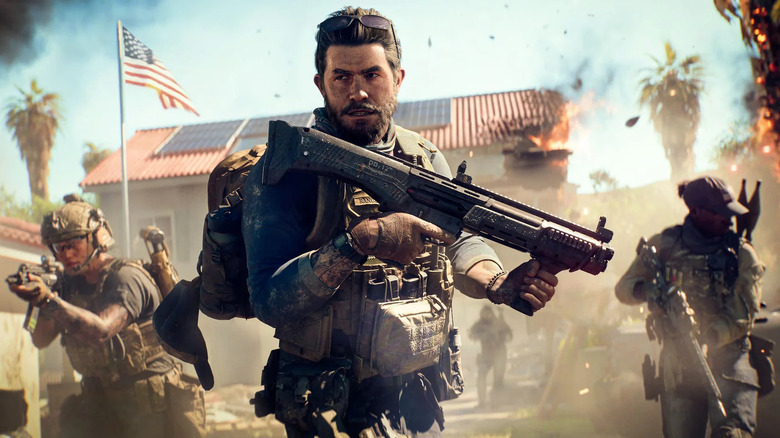
How a record-breaking launch, 20 million copies sold, and the biggest marketing push in franchise history turned into a cautionary tale about promises, patches, and player trust.
On October 10, 2025, Battlefield 6 did something no Battlefield game had done in over a decade: it outsold Call of Duty. Within three days, over 7 million copies flew off digital shelves. The Steam concurrent player peak hit 747,440, shattering franchise records. Reviewers called it a return to form. EA reportedly expected 100 million players. For a brief moment, Battlefield was back on top.
Ten months later, the Steam 24-hour peak hovers around 54,000 players. The game has lost roughly 90% of its launch audience. The four studios that built it have all suffered layoffs. The community that defended it at launch now writes angry essays about XP boosters and broken patches. And the most painful part? The core game is actually good. This is not a story about a bad game failing. It is a story about a good game being slowly dismantled by its own live service.
What did EA and Battlefield Studios promise before launch?
After the disaster of Battlefield 2042, EA knew it had one shot at redemption. The messaging around Battlefield 6 was carefully crafted to win back a community that felt betrayed. Classic class-based combat. Grounded soldier models. No more hero shooter nonsense. A full single-player campaign. Large-scale Conquest on properly designed maps. The return of fan-favorite modes. Four studios, DICE, Criterion, Motive, and Ripple Effect, all working together under the oversight of Vince Zampella.
The marketing leaned hard on nostalgia and trust. Trailers showed the kind of sandbox warfare Battlefield fans had been begging for: tanks rolling through valleys, helicopters trading missiles over capture points, squads actually working together. No battle royale bait-and-switch. No specialists. Just Battlefield, finally done right.
EA also promised something else: a live service that would not repeat 2042’s content drought. Seasons would arrive on schedule. Maps would come regularly. The Battle Pass would be fair. Community feedback would be heard through Battlefield Labs. This was supposed to be the Battlefield that learned from every mistake.
The Pre-Launch Promise Checklist
- Classic Battlefield: Classes, not specialists. Grounded military aesthetic.
- Full campaign: A proper single-player experience, not multiplayer-only.
- Great maps at launch: Mirak Valley was praised, but concerns about the rest of the pool existed even in beta.
- Regular seasonal content: Scheduled seasons with new maps, modes, and weapons.
- Fair monetization: A $35-70 base game with a Battle Pass that would not feel exploitative.
- Four-studio support: DICE, Criterion, Motive, and Ripple Effect all contributing.
- Community-driven development: Battlefield Labs would guide the roadmap.
PC Gamer’s Morgan Park captured the launch mood perfectly: “The greatest compliment I can pay to Battlefield 6 is that it’s the only game I want to play right now.” The gunplay was crisp. The sound design was incredible. Conquest on Mirak Valley felt like classic Battlefield at its best. For about two weeks, the game genuinely seemed to deliver on its promises.
How did Battlefield 6 lose 90% of its players?
The decline was not sudden. It was a death by a thousand cuts, each one documented in Steam charts, patch notes, and increasingly frustrated Reddit threads. Here is how the numbers tell the story:
| Period | Steam Peak | What Happened |
|---|---|---|
| Oct 2025 (Launch) | 747,440 | Record-breaking franchise launch |
| Nov 2025 | ~300,000+ | Season 1 / RedSec arrives, mixed reception |
| Dec 2025 | ~94,000 | Holiday drop, Black Ops 7 competition |
| Jan 2026 | ~84,000 avg | Down ~90% from peak; Season 2 delayed |
| Feb 2026 | ~65,000 | Season 2 finally launches |
| Mar 2026 | ~60,000 | Layoffs hit all four studios |
| Jun 2026 | ~64,000 | Season 3 bump, then fade |
| Aug 2026 | ~54,000 | Top Gun update provides modest lift |
The first real warning sign came just two weeks after launch. Season 1 dropped on October 25, 2025, and it was a mess. The new battle royale mode, RedSec, was poorly received. The new map was forgettable. The cosmetics were widely criticized as bland or tonally inappropriate. Players who had bought a premium military shooter found themselves looking at a Battle Pass filled with items they did not want, in a mode they did not ask for.
Then ARC Raiders launched on November 3, just three weeks after Battlefield 6. Embark Studios’ free-to-play extraction shooter peaked at nearly 482,000 concurrent players and, critically, retained over 90% of that audience month after month. Battlefield 6, meanwhile, was already bleeding. The comparison became impossible to ignore.
By January 2026, Battlefield 6’s Steam reviews had slipped to “Mixed.” Recent reviews hit 53% positive. The game that was supposed to restore faith in the franchise was now rated worse than some of the games it was meant to replace.
What patches did Battlefield Studios release and how did players react?
Bungie has not been the only studio fumbling patches in 2026. Battlefield Studios has released a steady stream of updates, but the pattern has been disturbingly consistent: each patch fixes some things, breaks others, and somehow manages to annoy the community in new ways.
Update 1.2.1.5 (March 3, 2026): The QoL patch that could not fix the mood
This update focused on quality-of-life improvements, stability fixes, UI cleanup, and Battle Pass adjustments. It also restored missing store content and addressed “critical revive and gadget interactions.” On paper, this was exactly what the game needed. In practice, it arrived after months of player frustration had already calcified. You cannot patch away a community’s loss of trust with menu fixes.
Season 2 (February 2026): Four months too late
Season 2 was supposed to reignite momentum. It brought new maps, modes, weapons, vehicles, and cosmetics. But it launched in mid-February, nearly four months after Season 1, after being delayed from January. In live service terms, that is an eternity. By the time it arrived, many players had already moved on to ARC Raiders, Marvel Rivals, or simply back to their old favorites.
The delay was particularly damaging because Season 1 had been so underwhelming. Players who stuck around through a weak first season were told to wait another month for the real content. A significant number decided not to.
Season 3 (June 2026): The XP Booster disaster
If there is one patch saga that perfectly captures Battlefield 6’s live service dysfunction, it is the XP Booster controversy. Here is what happened:
June 9, 2026: Update 1.3.2.0 quietly changes the in-game description of XP Boosters to say they count down during in-game time instead of real-world time. Players celebrate. Hours later, Battlefield Studios calls it a “text error” and reverts it.
June 30, 2026: Patch 1.3.3.0 goes live. An in-game mail message is sent titled “XP Booster Update: Now Based on In-Game Time,” fully explaining the change. Players celebrate again. Hours later, it is called another “error” and removed. The second time in three weeks.
This matters because XP Boosters are sold in the in-game store for real money. The real-time countdown means your booster ticks away while you are in menus, adjusting loadouts, waiting for matchmaking, or dealing with the EA App. It is a mechanic that directly benefits the publisher at the player’s expense. Twice teasing a fix and twice calling it an error does not read as incompetence to most players. It reads as deliberate.
The same patch did bring genuine content: the Wet Work Event, Tactical Obliteration mode, Casual Battle Royale, and a significant gunplay overhaul adjusting damage multipliers and recoil. But nobody was talking about any of that. They were talking about the XP Boosters.
Season 4 / Update 1.4.2.0 (August 18, 2026): Top Gun and Wake Island
The most recent major update brought a Top Gun crossover event, the return of Wake Island, two new fighter jets (the F/A-81F Super Spectre and F-74A Seacat), and new modes called Carrier Strike and Fighter Sweep. It also added custom lobbies, spectator mode, and proximity chat. This was a genuinely substantial patch that addressed long-standing community requests.
The problem? It took ten months to get here. And while Wake Island is a beloved classic, one good map and a movie crossover cannot undo months of accumulated frustration. Steam numbers saw a modest bump to around 79,000, but that is still barely 10% of the launch peak.
What did the community ask for versus what did Battlefield Studios actually deliver?
The gap between what players wanted and what they got is where this story really hurts. Battlefield Studios was not ignoring feedback entirely. They just could not deliver it fast enough, completely enough, or competently enough.
| What the Community Wanted | What Battlefield Studios Delivered | Did It Work? |
|---|---|---|
| Faster, more generous progression | Slower grind, tedious weapon challenges, real-time XP Boosters | No — progression became a meme |
| More maps, more often | Two maps per season, often poorly received | No — content drip felt insulting |
| Classic Battlefield modes done right | RedSec battle royale, Portal mode that felt unfinished | No — BR alienated core fans |
| Server browser | Still missing at launch; matchmaking only | No — a basic feature absent for months |
| Cosmetics that fit the military tone | Bland skins, AI-generated player cards, overpriced store items | No — cosmetics widely mocked |
| Stable patches that fix more than they break | Repeated regressions, UI bugs, hit registration issues | No — each patch brought new problems |
| On-time seasonal content | Season 2 delayed by months, content staggered | No — killed all momentum |
| Meaningful weapon customization | Boring attachments, pooled point system, guns locked behind grind | Partially — gunplay itself was praised |
The weapon challenge system is a perfect microcosm of the problem. To unlock the KTS100 LMG, a standout gun from the beta, players needed to deal 10,000 hipfire damage with LMGs and trigger 300 enemy suppressions. What counts as suppression? As PC Gamer’s Morgan Park discovered, you apparently need to be far from the target, the target needs to be injured, and counterintuitively, you have to miss your shots. Killing someone, the ultimate form of suppression, does not count. This is not challenging gameplay. It is bad design dressed up as progression.
Battlefield 6 isn’t so much dying as trying its players’ patience. After all, the core gameplay, from the movement and guns to the atmosphere and objective-focused modes, still feels fun. This is probably the most fun the series has been in years, so to see it going through death by a thousand cuts is disappointing for any fan.
— Ravi Sinha, GamingBolt, January 2026What was the exact moment player trust broke?
If you are looking for a single inflection point, there are three candidates. Any one of them alone might have been survivable. Together, they created a cascade.
Candidate 1: Season 1’s RedSec battle royale (October 25, 2025)
Two weeks after a triumphant launch, the first season dropped a battle royale mode that nobody asked for, on a map nobody loved, with cosmetics nobody wanted. This was the moment players realized that Battlefield Studios’ vision of a live service did not align with theirs. The core Conquest experience was excellent, but the seasonal wrapper around it felt like it had been designed by a different team with different priorities.
Candidate 2: The Season 2 delay (January 2026)
Delaying your first major content update by weeks, after your first season underwhelmed, is live service suicide. Players who had gritted their teeth through Season 1 were told to wait longer. The Steam charts show exactly what happened next: the January average dropped to 84,000, and the game never recovered its post-launch energy.
Candidate 3: The double XP Booster “error” (June 2026)
This is the one that moved frustration into genuine distrust. Teasing a player-friendly change twice, in two separate patches, and calling it an error both times is either staggering incompetence or a cynical attempt to test community reaction without committing. Either way, players stopped giving Battlefield Studios the benefit of the doubt. When your monetization mechanics are undermining player goodwill in a $70 game that already sold 20 million copies, you have lost the plot.
But the real answer is that trust did not break in a single moment. It eroded. Every delayed season, every broken patch, every grindy challenge, every bland cosmetic, every menu bug after a match, every bot-filled lobby, every missing server browser reminder, every “we hear you” blog post with no follow-through, it all added up. By the time the XP Booster saga happened, the community was already out of patience.
Why did ARC Raiders keep its players while Battlefield 6 lost theirs?
The most damning comparison in this entire story is not Call of Duty. It is ARC Raiders.
| Metric | Battlefield 6 | ARC Raiders |
|---|---|---|
| Launch peak (Steam) | 747,440 | ~482,000 |
| Retention (months later) | ~10% of peak | ~90%+ of peak |
| Price | $35-70 | Free-to-play |
| Developer pedigree | DICE, Criterion, Motive, Ripple Effect | Embark Studios (relatively new) |
| Marketing budget | Massive AAA campaign | Modest, creator-driven |
| Post-launch updates | Delayed, controversial | Consistent, well-received |
| Steam recent reviews | ~53% (Mixed) | Mostly Positive / Positive |
ARC Raiders had less money, less brand recognition, and a smaller launch. But it had one thing Battlefield 6 did not: a live service that respected its players’ time. Embark Studios delivered updates that worked, listened to feedback, and built trust week after week. Battlefield Studios had the better game at launch and squandered it.
Streamers like Shroud, TimTheTatman, and Nadeshot kept playing ARC Raiders because the game kept giving them reasons to. Battlefield 6 had the bigger names, the bigger budget, and the bigger launch. It just could not keep anyone’s attention.
What happens now? Can Battlefield 6 recover?
The honest answer is: probably not to its launch numbers, but it does not need to. Battlefield 6 still has a core player base in the tens of thousands on Steam alone, plus console players. The game is not dead. It is wounded.
EA has signaled continued commitment. The August Top Gun update and Wake Island return show the studio is still investing in major content. Custom lobbies and spectator mode address long-standing community requests. If Battlefield Studios can deliver consistent, meaningful updates without the delays and controversies, the game could stabilize as a solid mid-tier live service.
But there are structural problems that no patch can fix:
The layoffs have already happened. In March 2026, EA laid off developers across all four studios that worked on Battlefield 6. The company called it a “realignment.” Players called it what it was: a smaller team for a game that needed a bigger one. EA says Battlefield “remains one of our biggest priorities,” but actions speak louder. You do not lay off the people who just made your best-selling game of the year if you are truly all-in.
The 100 million player expectation was fantasy. EA reportedly told investors in 2025 that Battlefield 6 could reach 100 million players. Not even the developers believed it. When management sets impossible targets and then “realigns” teams after those targets are missed, the problem is not the game. It is the business model expecting Fortnite numbers from a premium military shooter.
The live service foundation was built on sand. A live service lives or dies on momentum. Battlefield 6 lost its in the first month and never got it back. Seasonal delays, bad patches, and monetization missteps created a negative feedback loop: fewer players meant worse matchmaking, which meant more bots, which meant more players leaving. ARC Raiders avoided this trap by shipping updates that actually worked.
If you are looking for multiplayer games that are holding their audience right now, check out what is worth playing among the best games this month or explore some solid co-op shooters if you want team-based action without the live service drama.
What can the industry learn from Battlefield 6’s failure?
For a game that sold 20 million copies and topped the US charts, calling Battlefield 6 a failure feels wrong. But in live service terms, that is exactly what it is. A game that cannot retain its audience is a game that cannot sustain itself. Here is what other publishers should take away:
Launch quality means nothing without post-launch velocity. Battlefield 6 had one of the best-reviewed launches in franchise history. Ten months later, that goodwill is gone. A live service is a marathon, not a sprint, and Battlefield 6 treated its first month like a finish line.
Do not promise community-driven development if you cannot act on feedback quickly. Battlefield Labs sounded great in marketing. But when the community asked for a server browser, faster progression, and better maps, the response was measured in seasons, not weeks. By the time changes arrived, the players who asked for them had left.
Monetization cannot undermine trust. The XP Booster saga was a relatively small issue in isolation. In context, it was catastrophic. When players believe you are squeezing them for booster sales in a game they already paid $70 for, every other problem gets magnified. If you are curious about how other games handle player trust and money, our look at how gaming businesses make money puts this in broader context.
Delays are better than bad content, but only if you communicate. Season 2’s delay might have been the right call for quality. But the silence around it, and the weak Season 1 that preceded it, made the delay feel like abandonment rather than care. Communication is not a blog post every two weeks. It is transparency about what is happening and why.
Four studios is not always better than one. The multi-studio approach that was supposed to accelerate development may have done the opposite. Coordination overhead, conflicting visions, and the loss of Vince Zampella all contributed to a game that felt, at times, like it was being pulled in different directions. Sometimes a smaller, focused team ships better updates than a sprawling consortium.
Frequently Asked Questions
As of August 2026, Battlefield 6’s 24-hour peak on Steam is roughly 54,000 concurrent players, with monthly averages around 40,000-44,000. The all-time Steam peak was 747,440 on October 10, 2025. Console player numbers are not publicly available, but Circana data shows the game ranked in the top 10 for active players on PlayStation and Xbox in the US as of late 2025.
Yes, commercially. Battlefield 6 sold over 7 million copies in its first three days and over 20 million total, making it the best-selling game in the franchise’s 24-year history and the best-selling game in the United States in 2025. It was also the first Battlefield to outsell Call of Duty in decades. The problem is retention, not sales.
Multiple factors: Season 1’s poorly received RedSec battle royale mode, delayed seasonal content (Season 2 was pushed to February 2026), slow and grindy progression, tedious weapon unlock challenges, bland cosmetics, technical issues including hit registration and bot-filled lobbies, missing features like a server browser, and the XP Booster controversy that damaged community trust. ARC Raiders launching three weeks later and retaining 90%+ of its players provided a stark contrast.
In June 2026, Battlefield Studios twice teased changing XP Boosters from real-time countdown to in-game time countdown, which would stop the timer in menus and matchmaking. Both times, the change was retracted within hours and called an “error.” Since XP Boosters are sold for real money, many players viewed this as either incompetence or a deliberate attempt to maintain a monetization mechanic that benefits the publisher at the player’s expense.
Most players and critics agree the core gameplay is significantly better. The gunplay, sound design, class system, and Conquest mode are widely praised as a return to form. However, the live service execution has been similarly troubled, with delayed content, technical issues, and community trust problems. Where 2042 failed at launch, Battlefield 6 failed gradually after a strong start.
Yes. In March 2026, EA laid off an unknown number of employees across all four studios that worked on Battlefield 6: DICE, Criterion, Motive, and Ripple Effect. EA described this as a “realignment” to better align teams around community priorities. The layoffs occurred despite Battlefield 6 being a record-breaking commercial success, highlighting how sales alone do not protect jobs in the live service era.
RedSec is the battle royale mode introduced in Season 1 of Battlefield 6. It was poorly received by much of the community, who felt it distracted from the core Conquest and Breakthrough experience they had bought the game for. The Battle Pass also forced players to play RedSec to complete challenges and progress, which further alienated players who had no interest in battle royale.
If you enjoy large-scale Conquest warfare and do not mind a reduced player pool, the core game is genuinely excellent. The gunplay, sound design, and sandbox moments are among the best in the series. However, be aware that matchmaking can be slow, lobbies may include bots, and the live service future is uncertain. If you want a populated multiplayer experience with consistent updates, ARC Raiders or other current shooters may be a safer bet.
Battlefield 6 had a bigger launch (747K vs 482K Steam peak) but lost 90% of its players, while ARC Raiders retained over 90%. ARC Raiders is free-to-play with consistent, well-received updates and strong streamer support. Battlefield 6 is a premium game with delayed seasons, controversial patches, and grindy monetization. The comparison has become a shorthand for how live service execution matters more than launch scale.
EA has stated that Battlefield remains one of its biggest priorities and that investment in the franchise continues. The August 2026 Top Gun update and Wake Island return demonstrate ongoing support. However, the layoffs across all four development studios suggest the team is smaller than before. Future content is likely, but the pace and scale may be reduced compared to the original roadmap.