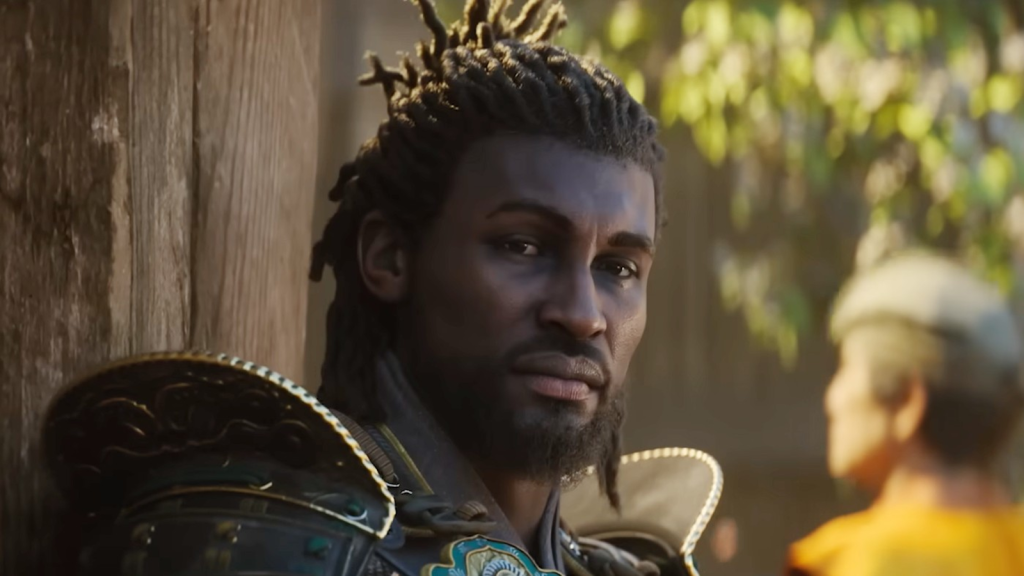
When Assassin’s Creed Shadows was announced, the conversation was supposed to be about feudal Japan, a setting fans had requested for fifteen years. Instead, it became a referendum on a Black samurai, a culture war proxy battle, and a harassment campaign that forced Ubisoft to build an anti-harassment task force before the game even shipped. We spent six months tracking the discourse, the sales, the reviews, and what developers actually said. The result is a forensic map of what happens when a video game becomes a battlefield for arguments that have nothing to do with gameplay.
On September 10, 2026, Assassin’s Creed franchise boss Marc-Alexis Coté gave an interview that should have been about the future of one of gaming’s longest-running series. Instead, he spent much of it discussing something that had happened two years earlier: the backlash against Assassin’s Creed Shadows that he described as “devastating” for the development team. Not disappointing. Not frustrating. Devastating. A word you use when something breaks people.
The backlash in question was not about gameplay loops or monetization or technical performance. It was about the game’s two protagonists: Yasuke, a Black samurai based on a real historical figure, and Naoe, a female shinobi. From the moment Shadows was revealed in May 2024, these characters became symbols in a culture war that predated them and will outlast them. By the time the game launched in March 2025, Ubisoft had reportedly implemented an anti-harassment plan for developers, the main Assassin’s Creed subreddit had banned historical accuracy “debates” about Yasuke, and Elon Musk had tweeted that “DEI kills art” in direct reference to the game.
This article is an attempt to do something the discourse has largely failed to do: separate the actual game from the argument about it. We are not here to tell you whether Yasuke should have been the protagonist. We are here to examine what actually happened to the people who made this game, what the backlash actually consisted of, what the game actually is, and whether any of the noise correlated with reality.
Part I: What the developers actually said
Before we can understand the impact of the backlash, we need to understand what the developers were responding to. The timeline matters.
May 2024: Ubisoft reveals Assassin’s Creed Shadows. The trailer shows two protagonists: Yasuke, a towering African samurai, and Naoe, a Japanese shinobi. The response is immediately polarized. Some fans celebrate a finally-realized feudal Japan setting with an interesting dual-protagonist structure. Others focus on Yasuke’s presence, questioning whether a Black man should be a lead character in a game about Japanese history.
June 2024: Elon Musk tweets “DEI kills art” in response to a post about Yasuke. The tweet is later deleted, but not before generating millions of impressions and effectively legitimizing the backlash in the eyes of many online communities. Executive producer Karl Onnée responds by saying Musk is “feeding hatred.” The story is no longer about a video game. It is about a billionaire with 180 million followers declaring war on a creative decision.
July 2024: Ubisoft releases an official statement addressing “historical accuracy” concerns. The statement says, in essence, that Assassin’s Creed has never been a factual representation of history, that Yasuke was a real person who served Oda Nobunaga, and that the game is a work of historical fiction. The statement is measured, factual, and arguably unnecessary. It also backfires. PC Gamer’s Wes Fenlon writes that “a reasonable statement that didn’t need to be made provides fresh fuel for the outrage factory.” The main Assassin’s Creed subreddit, with over 700,000 members, locks down posts debating Yasuke’s samurai status and tells users: “There is no debate.”
The current climate is tough on our creative teams. They face lies, half truths and personal attacks online.
— Ubisoft statement, November 2024November 2024: Marc-Alexis Coté addresses the backlash directly. He calls the impact on staff “devastating.” He distinguishes between “bad faith commenters” and legitimate criticism, noting that the former “attempt to disrupt and dissuade creative teams from telling stories featuring diverse and inclusive characters.” He does not claim all criticism is malicious. He claims that enough of it was malicious to wound the people making the game.
February 2025: Reports emerge that Ubisoft has an anti-harassment plan in place for Shadows developers, including a team to monitor networks and act swiftly against targeted attacks. Think about what this means. A video game publisher had to build a security infrastructure not for a controversial political simulation, not for a game about a current war, but for a historical fiction action game about ninja and samurai.
March 2025: Shadows launches. The critics mostly like it. The users mostly do not. The gap between critic and user scores on Metacritic is twenty points. Something has happened between the review build and the player base that has nothing to do with frame rates.
Part II: Who was Yasuke, and why did he break the internet?
To understand the backlash, you have to understand the subject. Yasuke was not invented by Ubisoft’s diversity committee. He was a real person, an African man, likely from Mozambique, who arrived in Japan in 1579 as a servant to Italian Jesuit missionaries. He came to the attention of Oda Nobunaga, the powerful daimyo who was unifying Japan. Nobunaga was fascinated by Yasuke’s appearance, his strength, and his demeanor. According to historical records, Nobunaga gave him a sword, a residence, and a stipend. He fought at Nobunaga’s side. When Nobunaga was betrayed and forced to commit seppuku in 1582, Yasuke was captured by enemy forces. His ultimate fate is unclear.
Whether Yasuke was technically a “samurai” is a matter of historical debate. The term “samurai” described a social class and warrior caste, not merely a job title. Some historians argue that Nobunaga’s patronage and the granting of a sword constituted samurai status. Others argue that without clan affiliation or land tenure, Yasuke existed outside the formal samurai hierarchy. What is not debated is that he was a real African man who wielded a sword in feudal Japan at the side of its most powerful warlord.
Historical context: Assassin’s Creed has always taken liberties with history. The first game featured a Syrian assassin fighting Richard the Lionheart. Ezio Auditore hung out with Leonardo da Vinci, Machiavelli, and the Pope. Bayek founded the Assassin Brotherhood in Ptolemaic Egypt alongside Cleopatra. Kassandra was a Spartan mercenary who lived for 2,400 years. The series has never been a documentary. The question is why Yasuke, specifically, triggered a backlash that none of these other creative liberties did.
The honest answer is that multiple things were happening at once, and they are not all the same thing. Some critics were genuinely interested in historical accuracy and questioned whether Yasuke’s prominence in the game matched his historical significance. Some Japanese players expressed concern about foreign developers portraying their history, a concern that exists independently of any American culture war. Some players simply did not like the dual-protagonist structure and wished for a single Japanese hero. And some participants in the backlash were openly racist, using Yasuke’s presence as an excuse to express hatred toward Black people and diversity initiatives in general.
The problem with the discourse is that these groups were lumped together. If you questioned Yasuke’s prominence, you were called racist. If you defended the creative choice, you were called a woke shill. The actual game, and the actual history, got lost in the crossfire.
Part III: What the backlash actually looked like
We need to be precise here, because precision matters when discussing harm. The backlash against Assassin’s Creed Shadows was not a single thing. It was a spectrum of behaviors, from legitimate criticism to targeted harassment.
On the legitimate end, there were forum threads and social media posts questioning whether Yasuke should be a co-lead rather than a supporting character. There were discussions about whether Ubisoft’s portrayal of feudal Japan relied too heavily on outsider perspectives. There were critiques of the marketing, which some felt emphasized Yasuke over Naoe in ways that seemed calculated to generate controversy. These are normal creative disagreements. They happen around every major creative decision in every major franchise.
On the illegitimate end, there was something else. Developers reported receiving death threats. Social media accounts associated with the game were flooded with racist slurs. Individual developers, not just the corporate Ubisoft account, were targeted by coordinated harassment campaigns. The anti-harassment plan Ubisoft implemented included legal action against critics who harassed developers, according to reports. This is not “criticism.” This is terrorism by another name, and it is the reason Cot used the word “devastating.”
The distinction that matters: Criticizing a creative decision is not harassment. Threatening a person’s life because of a creative decision is not criticism. The gaming community has a persistent problem with conflating these two things, either by calling all pushback harassment or by calling all harassment free speech. Neither position is honest. Shadows received both legitimate criticism and illegitimate harassment, and the latter is what broke the team.
The “DEI kills art” tweet from Musk was a watershed moment not because it said anything new, but because of who said it. When the world’s richest man with nearly 200 million followers declares your creative choice an example of art being destroyed by diversity, that declaration becomes a rallying cry. It does not matter that Musk had not played the game, had not seen the full script, and had no particular expertise in Japanese history or game design. What mattered was that he gave permission. Permission to be angry. Permission to conflate a creative choice with a political conspiracy. Permission to treat a video game as an invasion.
The impact on the development team, according to Coté, was that they “had to stop focusing on those who hated us.” Think about that. A team making a game about feudal Japan had to allocate mental and emotional energy to not focusing on the people sending them death threats. That is the dev tax of the modern culture war. It is not measured in hours or dollars. It is measured in the creative energy that does not go into the game because it is being spent on survival.
Part IV: The game itself, and the gap between critics and users
Here is where the forensics get interesting. Assassin’s Creed Shadows launched on March 20, 2025. The critic Metacritic score settled at 81. The user score settled at 6.1. That is not a small gap. That is a chasm. And it demands explanation.
| Source | Score | Core Verdict |
|---|---|---|
| PC Gamer | 80/100 | “Excellent stealth and combat prevail against Shadows’ dull story” |
| IGN | 8/10 | Generally favorable; strong dual-protagonist design |
| Eurogamer | 4/5 | Recommended |
| NME | 100/100 | “Series refresh badly needed after Valhalla” |
| The Seattle Times | Mixed | “When Shadows shines, it’s blinding. The other feeling you’ll feel far more often” |
The critics saw a game with genuinely excellent stealth mechanics, a beautiful open-world rendition of feudal Japan, a successful dual-protagonist structure where Naoe handled stealth and Yasuke handled combat, and a technical upgrade over the aging Valhalla engine. The 81 Metacritic is not a participation trophy. It reflects a game that most professional reviewers thought was good.
The users saw something else. Or rather, some users saw something else. The 6.1 user score is driven by a flood of zero and one-star reviews posted within days of launch, many of which do not mention gameplay at all. They mention Yasuke. They mention DEI. They mention “wokeness.” They are review bombs, and Metacritic’s user score has become increasingly useless as a measure of game quality because it is so easily weaponized.
But here is the uncomfortable truth: not all negative user reviews are review bombs. Some players genuinely disliked Shadows for reasons unrelated to culture war politics. Naoe is fragile in combat and cannot climb certain walls, a design choice that frustrated players who expected a more agile assassin. Eagle Vision, the series’ signature scouting tool, was significantly nerfed. The story, while functional, did not reach the heights of Ezio’s saga or even Origins’ Bayek. The open world, while gorgeous, still contained the familiar Ubisoft checklist of collectibles and repeatable activities. These are real criticisms from real players who played the game and found it wanting.
The forensic question is whether the negative user sentiment would have been as intense, or as widespread, without the culture war context. And the answer is almost certainly no. A game with an 81 Metacritic and genuine mechanical improvements over its predecessor should not have a 6.1 user score unless something else is happening. That something else is the two-year campaign to frame Shadows as a symbol of everything wrong with modern gaming before anyone had pressed a button.
Part V: The sales story, and what it actually means
The sales narrative around Shadows has been as contested as the review scores. Depending on which headline you read, the game is either a triumphant recovery for Ubisoft or one of the worst-selling mainline Assassin’s Creed entries in years. The truth, as usual, is more complicated.
At launch, Ubisoft announced that Shadows reached 2 million players in its first week. The careful wording, “players” not “sales,” suggested a significant portion of that number came from Ubisoft+ subscribers rather than full-price purchases. Two million players is not nothing, but it is below the launch performance of Origins, Odyssey, and Valhalla.
By November 2025, reports indicated Shadows had sold approximately 4.3 million copies in six months. For context, Assassin’s Creed Valhalla had sold 3.5 million copies in its first week alone. Mirage, the smaller Baghdad-set entry, reportedly outsold Shadows in three months. Alinea Analytics described Shadows’ sales as “the lowest among the last five major entries in the series.”
By June 2026, however, the picture had shifted. Reports indicated Shadows had crossed 7 million units, driven by price cuts, bundle deals, and the long tail that open-world games typically enjoy. Ubisoft’s fiscal year 2026 results showed net bookings of €2.06 billion, up from €1.73 billion the previous year, with the company citing the Assassin’s Creed franchise as a key driver of recovery.
The sales timeline
- March 2025: 2 million players in first week (below franchise standard)
- November 2025: ~4.3 million copies sold (lowest in recent mainline entries)
- June 2026: 7+ million copies (long-tail recovery via discounts and bundles)
- Ubisoft FY2026: Net bookings up to €2.06B, AC franchise cited as recovery driver
What the sales data suggests is that Shadows underperformed at launch relative to franchise expectations, then recovered over time. The underperformance could be attributed to multiple factors: the two-year backlash campaign that poisoned the well before launch, the declining relevance of the Assassin’s Creed brand after Valhalla’s bloat, competition from other open-world games, or simply that Shadows was a good but not exceptional entry in a series that demands excellence to move the needle.
What the sales data does not prove is that diversity killed the game. The lowest-selling recent Assassin’s Creed before Shadows was Mirage, which had a traditional Arab protagonist in a traditional Middle Eastern setting and no culture war controversy whatsoever. Sometimes games underperform because of market conditions, franchise fatigue, or quality issues. Not everything is a referendum on representation.
Part VI: The delay, and what it cost
Assassin’s Creed Shadows was originally scheduled for November 15, 2024. It was delayed to February 14, 2025. Then delayed again to March 20, 2025. According to Ubisoft CEO Yves Guillemot, the delay was a direct result of the backlash. In a November 2024 presentation, Guillemot showed a video to industry insiders explaining that the shift from “gameplay to ideology” in the discourse around Shadows had forced the company to reassess and refine the game.
This is a remarkable admission. The head of a major publisher acknowledged that online backlash had materially affected the development timeline of a $100+ million project. Not because the backlash revealed actual gameplay problems, but because the intensity of the conversation required the company to slow down and make sure the game could withstand the scrutiny.
The delay cost Ubisoft the holiday 2024 sales window. It extended the development burn rate by four months. It kept marketing spend active for an additional quarter. And it gave the backlash two more years to metastasize before players could actually judge the game on its merits. Whether the delay improved the final product is debatable. Some post-launch interviews suggest the extra time allowed for polish on the dual-protagonist balancing. Others suggest the game that shipped was essentially complete in November and the delay was pure damage control.
What is not debatable is that the delay represents a direct financial cost of the culture war. When people ask why game development is so expensive, why games take so long, why publishers seem so risk-averse, the Shadows delay is a case study. It is what happens when the conversation around a game becomes so toxic that the people financing it get scared.
Part VII: What got lost in the noise
While the internet argued about whether a Black man could be a samurai in a video game, several genuinely interesting things about Shadows received almost no attention.
The dual-protagonist structure is the most successful mechanical innovation in an Assassin’s Creed game since the naval combat in Black Flag. Naoe and Yasuke do not simply offer different dialogue options. They offer different games. Naoe is a stealth character: fragile, agile, reliant on tools and environmental traversal. Yasuke is a combat character: durable, direct, devastating in open conflict. Missions can be approached with either character, and the choice meaningfully changes how you play. This is not cosmetic diversity. This is mechanical diversity, and it works.
The setting, after fifteen years of fan requests, is finally feudal Japan. And it is gorgeous. The seasonal cycle, which changes the open world from spring cherry blossoms to winter snow, is not just visual flair. It affects gameplay: guards patrol differently in heavy rain, snow leaves tracks that can be followed or misdirected, frozen lakes create new traversal paths. This is the kind of systemic world design that Assassin’s Creed has promised for years and rarely delivered.
The stealth mechanics represent a genuine return to form. After years of RPG bloat where stealth was just one viable build among many, Shadows makes stealth viable, challenging, and satisfying again. Naoe’s toolset, the environmental interaction, the guard AI behaviors, all suggest a team that understood what made early Assassin’s Creed games compelling and wanted to bring that forward into the modern framework.
These are real achievements. They are not enough to make Shadows a masterpiece. The story is forgettable, the open-world checklist fatigue is real, and the technical polish does not match the visual ambition. But they are achievements that deserved discussion. Instead, the conversation was about a tweet from a car CEO.
Part VIII: The verdict, and what happens next
So what is the actual answer? Was the backlash about the game, or was it about something else entirely?
The honest answer is: both. The backlash contained multitudes. It contained historians and Japanese players with legitimate questions about outsider representation of their culture. It contained long-time Assassin’s Creed fans who were tired of RPG mechanics and wanted a return to stealth-focused design. It contained players who simply did not find Yasuke compelling as a protagonist. And it contained a coordinated campaign of racist harassment amplified by one of the most powerful people on Earth.
The problem is that these constituencies were not equally visible or equally loud. The historians and the thoughtful critics were drowned out by the slurs and the threats. The legitimate gameplay concerns were absorbed into a narrative that framed all criticism as racist or all defense as woke. The game became a Rorschach test, and what people saw in it said more about them than about Shadows.
For the development team, the distinction did not matter. When you are receiving death threats, you do not pause to categorize which criticism is legitimate and which is not. You simply experience the weight of it. Coté’s “devastating” comment is not hyperbole. It is a description of what happens when people who signed up to make entertainment find themselves in the crosshairs of a culture war they did not start and cannot control.
The lesson of Shadows is not that diversity kills games. The game sold 7 million copies, reviewed well with critics, and eventually helped stabilize a publisher that had posted a €1.5 billion loss. The lesson is that the conversation around games has become dangerously detached from the games themselves. When a creative decision about a historical figure can generate two years of harassment, multiple delays, an anti-harassment task force, and a CEO presentation about “ideology,” something has gone wrong with how we talk about art.
Assassin’s Creed Shadows is a good game with real flaws. It is not a masterpiece. It is not a disaster. It is a solid entry in a long-running franchise that tried something interesting with its dual protagonists and mostly succeeded. The fact that this reasonable, middle-of-the-road assessment feels almost radical tells you everything about how broken the discourse had become.
The team at Ubisoft Quebec made a game about a man from Mozambique who became a warrior in Japan. They made it while people threatened their lives. They made it while their CEO had to explain to investors why online anger was delaying their project. They made it while their own community banned discussion of their protagonist’s existence. And they made it well enough that 7 million people eventually bought it.
That is not nothing. That is, in its own way, a kind of victory. But it is a victory that cost more than it should have. And if the industry does not figure out how to protect its creators from the machinery of outrage, the next Shadows will cost even more. The fear that drives cancellations, the caution that drives layoffs, the risk aversion that turns innovation into formula: all of it is connected to a climate where making something different means preparing for war. Shadows survived that war. The scar tissue remains.
Frequently Asked Questions
Marc-Alexis Coté is the franchise executive producer for Assassin’s Creed at Ubisoft. He has worked on multiple entries in the series and serves as one of the public faces of the franchise. In September 2026, he gave an interview describing the impact of the Shadows backlash on the development team as “devastating,” bringing renewed attention to the harassment developers faced during production.
Yes. Yasuke was a real African man, likely from Mozambique, who arrived in Japan in 1579 and entered the service of Oda Nobunaga, one of Japan’s most powerful warlords. Historical records confirm he was given a sword, a residence, and a stipend by Nobunaga, and he fought alongside him. Whether he technically held samurai status is debated among historians, as “samurai” described a specific social and warrior caste. But his existence and his role in feudal Japan are documented historical facts.
The backlash contained multiple strands. Some critics questioned the historical accuracy of making Yasuke a co-lead protagonist. Some Japanese players expressed concern about foreign developers portraying their history. Some franchise fans disliked the dual-protagonist structure or the RPG mechanics. And a significant portion of the backlash was driven by racist harassment and culture war politics, amplified by high-profile figures like Elon Musk. The problem was that these different types of criticism were conflated in the public discourse.
Yes. Multiple reports confirm that Shadows developers received death threats and targeted harassment during development. Ubisoft reportedly implemented an anti-harassment plan before launch, including a team to monitor social networks and take legal action against targeted attacks. Yves Guillemot, Ubisoft’s CEO, publicly denounced the “racist, malicious backlash” in 2024. The harassment was a significant enough problem that it became a formal corporate security issue.
Assassin’s Creed Shadows received generally favorable reviews from critics, with a Metacritic score of 81 on PlayStation 5. Critics praised the dual-protagonist structure, the return to stealth-focused gameplay, the beautiful open-world rendition of feudal Japan, and the technical improvements over Valhalla. However, user scores on Metacritic were significantly lower at 6.1, driven in part by review bombing campaigns focused on the Yasuke controversy rather than gameplay.
Shadows had a lukewarm launch relative to franchise standards, reaching 2 million players in its first week. Six-month sales of approximately 4.3 million copies made it the lowest-selling mainline entry among recent Assassin’s Creed games. However, long-tail sales through discounts and bundles eventually pushed the total past 7 million copies by mid-2026, contributing to Ubisoft’s financial recovery after a €1.5 billion loss in FY2026.
According to Ubisoft CEO Yves Guillemot, yes. The game was delayed twice, from November 2024 to February 2025 and then to March 2025. Guillemot reportedly told industry insiders that the shift from “gameplay to ideology” in the discourse around Shadows contributed to the decision to delay and refine the game. The delays cost Ubisoft the holiday sales window and extended development expenses by several months.
Critical consensus says yes, with reservations. Shadows is widely considered a good Assassin’s Creed game with excellent stealth mechanics, a successful dual-protagonist structure, and a beautiful open world. Its weaknesses include a forgettable story, some open-world bloat, and gameplay imbalances between the two protagonists. It is not considered a franchise masterpiece on the level of Black Flag or Brotherhood, but it is a solid, well-crafted entry that represents a step up from Valhalla.
In June 2024, Elon Musk tweeted “DEI kills art” in response to a post about Yasuke’s inclusion in Assassin’s Creed Shadows. The tweet was later deleted, but not before generating millions of impressions and becoming a rallying cry for opponents of the game. Executive producer Karl Onnée responded publicly, saying Musk was “feeding hatred.” The exchange exemplified how the Shadows controversy escaped the boundaries of gaming discourse and entered mainstream political culture.
Despite the controversy, Shadows’ eventual commercial success and the franchise’s contribution to Ubisoft’s financial recovery suggest the series will continue. However, the experience has likely made Ubisoft more cautious about creative decisions that could trigger similar backlashes. The question is whether that caution will manifest as better community management and creator protection, or as safer, less adventurous creative choices. The entire industry is watching to see which lesson Ubisoft learned.