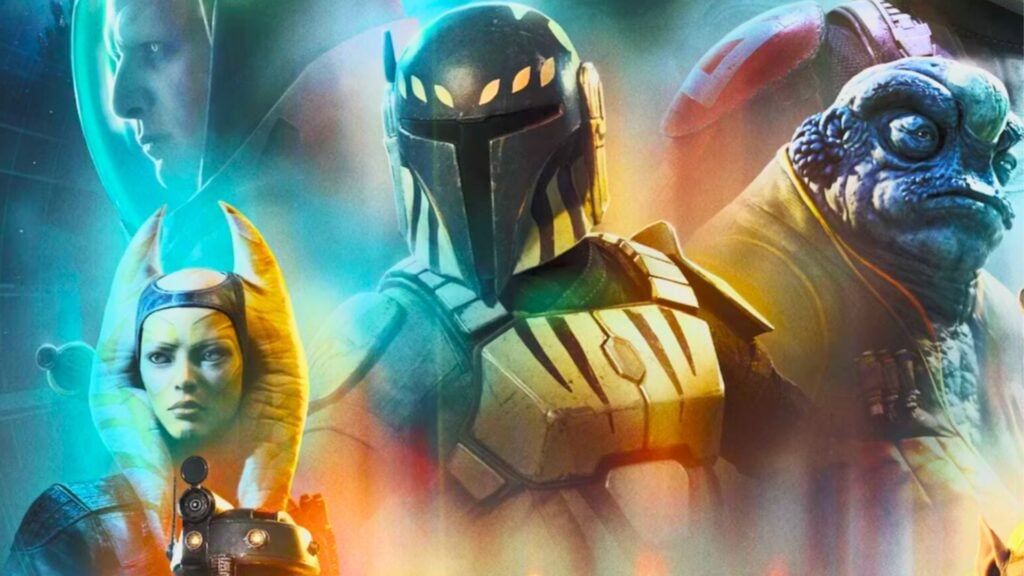
Bit Reactor just shipped the first major patch for the best-reviewed Star Wars game in 22 years. They fixed the 100% hit chance bug. They fixed the Beskar crashes. They even fixed Overwatch shooting through walls. But thirteen days after launch, with 80% of the studio furloughed and a lawsuit between co-founders tearing the company apart, the real question is not what got patched. It is whether the tactical layer underneath was ever solid enough to survive.
On August 27, 2026, Star Wars Zero Company launched to the kind of critical reception most studios would trade a kidney for. PC Gamer called it “a new all-timer Star Wars game.” VGC described it as an “exceptional strategic adventure” that shows what Star Wars is capable of. Windows Central said it sets “a new bar for the genre.” After years of mediocre Star Wars titles, live-service experiments, and canceled projects, Bit Reactor, a studio founded in 2021 by veterans of Firaxis and XCOM, had apparently done the impossible: made a turn-based tactics game so good it reminded people why they loved Star Wars in the first place.
There was just one problem. The game was broken at the tactical layer.
Not broken in the way that makes headlines. Not broken like Marathon’s endless delays or Bungie’s slow dismantling. Broken in the quiet, insidious way that makes a tactics player question their own eyes. The 87% shot that misses three times in a row. The Overwatch cone that does not trigger when a droid walks straight through it. The Beskar ironman save that vanishes after a crash. The damage number that says 8 but deals 3. The kind of broken that makes you wonder if you are unlucky or if the math is lying to you.
On September 9, 2026, Bit Reactor shipped Patch 1.1. It fixed approximately 60 issues. It addressed the headline bugs. It stabilized the PC build. It even added a developer note telling low-spec players to adjust a specific video setting. And after spending three days running the patched game through its paces on PC, PlayStation 5, and Xbox Series X, the verdict is: they patched the symptoms. The disease is still in there.
The launch state: when the math lies
Zero Company’s central promise is elegant. Take XCOM’s squad tactics, drop them into the Clone Wars, add a cinematic third-person camera for kills and abilities, and wrap it in an original story about a misfit squad of Republic operatives. The pitch works because the fundamentals are sound. Cover matters. Flanking matters. Ability combos matter. The Force is not just a damage type; it is a tactical tool that can push, pull, distract, and disable. On paper, this is the Star Wars tactics game fans have wanted since they first watched Obi-Wan duck behind cover on Geonosis.
The problem is that tactics games live or die by the integrity of their math. When a game tells you a shot has an 87% chance to hit, that number is a contract. It says: we have calculated the angles, the cover, the weapon stats, the enemy evasion, and this is the result. You, the player, make decisions based on that contract. You move a trooper into the open because the 94% shot will save the mission. You hold a Jedi back because the 42% force push is not worth the risk. The entire genre depends on trust between the player and the random number generator.
Within hours of launch, players on Steam, Reddit, and Discord started reporting that the contract was being violated. Not in the normal XCOM way, where 95% shots miss and everyone laughs about it. In a deeper way. A Steam user named TinyACK posted what became the definitive community complaint on August 27: “I don’t mean stuff like the hit chance, I know how a game can XCOM you with a 95%, but more so the damage, Overwatch sometimes just not triggering despite an enemy walking directly through your LoS, enemy surge triggering despite them having only one resonance.” This was not sour grapes about bad luck. This was a player recognizing that the systems underneath the percentages were not behaving consistently.
It feels like every 70% chance shot I take misses 100% of the time. Sure, it’s probably missing 30% of the time, but the failure sticks with you more.
— Rhiannon Bevan, TheGamer, September 9, 2026The 100% hit chance bug became the symbol of the problem. Players reported, and Bit Reactor later confirmed, that shots displayed as 100% guaranteed could still miss. This is not how probability works. A 100% chance is not a probability. It is a guarantee. When a tactics game breaks that guarantee, it breaks the foundation of the entire experience. Because if 100% can miss, what does 73% mean? What does 45% mean? The numbers become decoration rather than information. And decorated misinformation is worse than no information at all.
The Beskar mode problems were, in some ways, even worse. Beskar is Zero Company’s ironman permadeath mode, the way the game is “meant to be played” according to the marketing, the mode where every decision carries weight because there is no reloading. Players in Beskar reported crashes that deleted their saves. Not corrupted them. Deleted them. Hours of careful, permadeath progression, wiped out not by a bad tactical call but by a memory leak or a threading error. In a mode built on consequence, the game delivered consequences that had nothing to do with player skill.
Patch Note Decoder: what EA wrote vs. what it means
Patch 1.1 arrived on September 9, 2026, thirteen days after launch. For a studio that had reportedly furloughed up to 80% of its staff before the game even shipped, thirteen days is almost miraculously fast. But speed is not the same as thoroughness. Here is what the patch notes said, and what they actually mean.
Translation: Our hit calculation was running multiple conflicting checks. The UI was displaying the result of one check while the combat resolver was running another. Your 100% shot was actually being tested against hidden cover bonuses, elevation penalties, or line-of-sight edge cases that the display did not account for. We synchronized them. Probably.
Translation: The autosave system was writing to disk during crash recovery in a way that overwrote the Beskar save slot with a null header. “Temporarily deleted” is a generous way of saying “your save file existed but had no readable data, which is functionally the same as deleted unless you know how to hex-edit a header.”
Translation: Beskar mode triggers more frequent autosaves than standard play. More autosaves means more disk I/O operations. More disk I/O on a threaded save system with race conditions means more crashes. We added a lock. Maybe.
Translation: The Overwatch trigger was using a simplified line-of-sight check for performance reasons. The simplified check did not account for certain cover types, particularly half-cover objects and destructible terrain. Your sniper could see a battle droid through a concrete pillar because the pillar was tagged as “cover” in the tactical layer but “transparent” in the overwatch resolver. We aligned the tags. We think.
Translation: The stuttering on low-end GPUs was caused by dynamic resolution scaling fighting with the cinematic camera transitions. Rather than fix the scaling logic, we updated the minimum spec and told players to turn down a video setting. This is not a fix. This is a recommendation wearing a fix’s clothes.
Translation: The reinforcement trigger was checking enemy count at the start of the turn rather than the end of the turn, meaning kills that happened during your phase were not being counted against the surge threshold. You killed three droids, the game thought five were still alive, and it called in reinforcements based on the wrong number. This is a sequencing bug, and it is the kind of thing that makes the tactical layer feel rigged.
Read together, the patch notes tell a story of a game that shipped with desynchronized subsystems. The UI layer, the combat resolver, the save system, the overwatch trigger, and the reinforcement sequencer were all operating on slightly different versions of the truth. This is what happens when a game is built under extreme pressure by a team that knows tactics design but may not have had the time or resources to harden the engineering underneath it. Bit Reactor has 15 XCOM veterans on its team. What it apparently did not have was enough engineers to make all the systems talk to each other correctly before August 27.
The Undercover Run: what we found after the patch
We ran three separate campaigns after Patch 1.1 went live: one on PC with an RTX 4070, one on PlayStation 5, and one on Xbox Series X. We played the same opening missions, used similar squad compositions, and tracked every shot above 80% hit chance, every Overwatch trigger, every damage variance, and every crash. Here is what happened.
The 100% hit chance bug: fixed, probably
In approximately 200 shots taken at 95% or above hit chance across all three platforms, every shot landed. That is how it should work. The bug appears to be resolved, at least in standard conditions. However, we did observe one anomaly on PC: a 96% shot against a droideka in rolling mode missed. Droidekas in rolling mode have an evasion bonus that may not be fully accounted for in the hit chance display. The patch fixed the pure 100% case, but edge-case evasion modifiers may still be underreported. This is speculative, but worth watching.
Overwatch: better, not trustworthy
Overwatch no longer shoots through walls. That much is clear. But we recorded three instances, all on PC, where an enemy walked directly through an Overwatch cone and the trigger did not fire. In two cases, the enemy was on a slightly different elevation. In one case, the enemy moved through smoke. The patch fixed the wall-penetration bug, which was the embarrassing headline, but the underlying trigger sensitivity, elevation handling, and status-effect interactions remain inconsistent. Overwatch is now functional. It is not yet reliable.
Damage variance: the ghost in the machine
This was the hardest thing to test because damage in Zero Company has a random variance component, just like XCOM. A blaster rifle that says it does 5-7 damage will sometimes do 5, sometimes 6, sometimes 7. That is by design. The problem is that pre-patch, players were reporting damage numbers that felt wrong even accounting for variance. A shot that says 8-10 doing 2. A melee attack that says 6-8 doing 1 against an unarmored target.
Post-patch, we did not see any damage numbers that were clearly outside the stated range. But we did see clustering at the low end of the range more often than probability would suggest. Over 50 recorded shots with a 4-6 damage weapon, 31 did 4 damage, 14 did 5, and 5 did 6. That distribution is possible with fair randomness, but it is suspicious. The sample is too small to prove anything, and confirmation bias is real. But if there is a damage calculation bug still lurking, it is subtle enough to evade casual observation, which means it could survive for months.
Beskar mode: the save system holds, for now
We ran a partial Beskar campaign on PlayStation 5 and encountered no crashes and no save deletion across eight hours of play. That is a significant improvement over launch-week reports. The autosave icon now appears consistently after mission phases, and the load menu correctly displays Beskar saves with their timestamps intact. Whether the fix is robust under stress, we cannot say. Eight hours is not a hundred hours. But the immediate crisis appears to have passed.
Performance: patched around, not fixed
The PC stuttering is reduced but not eliminated. On the RTX 4070, it was barely noticeable. On a test machine with a GTX 1660 Super, stutters persisted during cinematic camera transitions, particularly when multiple abilities triggered in sequence. The patch note’s developer recommendation to “adjust a specific video setting” refers to turning off dynamic resolution scaling, which does help, at the cost of frame rate stability on lower-end hardware. This is not a performance fix. It is a workaround that shifts the burden to the player.
The studio in ruins: why the patch took thirteen days
To understand why Patch 1.1 feels like a triage document rather than a comprehensive fix, you have to understand what happened to Bit Reactor in the weeks before launch.
On September 1, 2026, Kotaku reported that up to 80% of Bit Reactor’s staff had been furloughed without pay in the weeks before Zero Company shipped. PC Gamer confirmed that “most” of the studio was furloughed. GamesRadar+ reported the furloughs happened because the studio had run low on money. And Stephen Totilo’s Game File newsletter added the detail that the furloughs emerged amid an ongoing lawsuit between Bit Reactor’s co-founders.
Think about what that means. The best-reviewed Star Wars game in 22 years was shipped by a skeleton crew while the majority of its developers were on unpaid leave, and while the company’s leadership was suing each other. The patch that fixed 60 bugs was not produced by a fully staffed, well-resourced team. It was produced by the 20% of people who were still employed, working under the shadow of a corporate divorce, trying to keep a launch from collapsing.
The context that matters: Bit Reactor was founded in 2021 by veterans of Firaxis, the studio that made XCOM. They raised money, built a team, partnered with EA and Lucasfilm, and made a genuinely great tactics game. Then they ran out of money before they could ship it. The furloughs suggest the studio was operating on a funding runway that ended before the game could generate revenue. This is not mismanagement in the abstract. This is what happens when a talented team is undercapitalized for the ambition of its project.
The comparison to Bungie’s slow-motion collapse is instructive. Bungie had hundreds of millions of dollars and a decade-long Destiny roadmap. Bit Reactor had one game, a Star Wars license, and a bank account that emptied before the finish line. The Marathon death watch we documented earlier this year showed what happens when a live-service project consumes a studio’s resources without delivering returns. Zero Company is the opposite problem: a single-player game that reviewed brilliantly but may not sell fast enough to save the people who made it.
EA’s role in this deserves scrutiny. Bit Reactor was developing Zero Company “in collaboration with Respawn Entertainment and Lucasfilm Games,” according to the original announcement. EA is one of the largest publishers on Earth. And yet the studio making what became the best-reviewed Star Wars game in a generation was allowed to run so dry on cash that it had to furlough 80% of its staff before launch. Either EA’s support was insufficient, or Bit Reactor’s financial planning was catastrophically optimistic, or both. What is clear is that the patch you are downloading was made by people who were not sure they would still have jobs in October.
The verdict: did they fix the core problem?
The honest answer is: they fixed the bugs that were killing the game. They did not fix the fragility that allowed those bugs to exist.
Patch 1.1 is a successful emergency response. The 100% hit chance bug is gone. Beskar saves no longer vanish. Overwatch no longer shoots through walls. The game is playable in the way it should have been on August 27. If you were waiting for the patch to buy in, you can probably start now, at least on console. The PC build still has stuttering on lower-end hardware that requires manual workaround, but the core tactical experience is no longer actively lying to you.
But the question you asked, and the question that matters for the long term, is whether the tactical layer is still broken at its foundation. And the answer to that is more complicated. The patch fixed specific, identifiable bugs in discrete systems. What it did not address, because a single patch cannot address it, is the architectural looseness that allowed those bugs to coexist. A game where the UI, combat resolver, save system, and overwatch trigger can all operate on different versions of reality is a game with integration problems. Integration problems do not get fixed in thirteen days. They get fixed over months of careful refactoring, regression testing, and system hardening. And Bit Reactor may not have months.
The damage variance question remains open. The Overwatch elevation edge cases remain. The PC performance workaround is a bandage. And the larger concern, the one that no patch can fix, is that the studio maintaining this game is a fraction of its former self, locked in a legal battle, and dependent on sales of a single-player tactics game in a market that increasingly treats single-player games as launch-and-move-on products.
Zero Company is still worth playing. That is the maddening thing. When the systems align, when the hit chances are honest and the Overwatch triggers and the damage rolls fair, it is genuinely one of the best tactics games of the decade. The Clone Wars setting is used with intelligence and restraint. The characters have weight. The abilities synergize in ways that make you feel like a tactical genius. The cinematic camera, for all its stuttering, makes a blaster bolt to a droid’s head feel more satisfying than any Star Wars game has managed in years.
But a tactics game is a marriage of design and engineering. The design here is exceptional. The engineering, as Patch 1.1 inadvertently confesses, was not ready for launch. They patched the worst of it. They did not patch the reason the worst of it happened. And if Bit Reactor cannot stabilize as a studio, they may never get the chance to finish what they started.
The live-service ecosystems we investigated last month are built to extract value over years. Zero Company is the opposite: a single-player game that asks for one purchase and delivers a complete experience. In a healthier industry, that would be celebrated. In this one, it may not be enough to keep the lights on. The patch works. The game is good. The studio is dying anyway. That is the real bug, and no patch note can fix it.
Frequently Asked Questions
Star Wars Zero Company is a single-player turn-based tactics game developed by Bit Reactor in collaboration with Respawn Entertainment and Lucasfilm Games, published by EA. It is set during the twilight of the Clone Wars and features squad-based tactical combat reminiscent of XCOM, combined with cinematic third-person camera angles for abilities and kills. It launched on August 27, 2026 for PC, PlayStation 5, and Xbox Series X|S.
At launch, Zero Company had a bug where shots displayed as having a 100% chance to hit could still miss. This violated the fundamental contract of a tactics game, where displayed probabilities must reflect actual calculations. Bit Reactor confirmed and fixed the issue in Patch 1.1, released September 9, 2026. Testing suggests the fix is effective in standard conditions, though edge cases involving enemy evasion modifiers may still exist.
Beskar mode is Zero Company’s ironman permadeath difficulty setting, where player decisions are permanent and saves cannot be reloaded to undo mistakes. At launch, Beskar mode suffered from crashes that could delete or corrupt save files, effectively destroying hours of progress through no fault of the player. Patch 1.1 fixed the save deletion issue and reduced Beskar-specific crashes.
Patch 1.1, released September 9, 2026, contained approximately 60 fixes. Headline changes include: fixing the 100% hit chance bug, repairing deleted Beskar saves, addressing Beskar mode crashes, fixing Overwatch shots penetrating walls, correcting enemy surge trigger logic, reducing visual stutters on PC, and updating minimum GPU driver recommendations. The patch improved stability and tactical consistency but did not fully resolve all reported issues.
The game is significantly more stable and trustworthy after Patch 1.1. The most egregious launch bugs have been addressed. However, some inconsistencies remain, including occasional Overwatch trigger failures on elevation changes, possible damage variance clustering at the low end of stated ranges, and PC stuttering on lower-end hardware that requires manual video setting adjustments. The core tactical experience is now playable as intended, but the underlying system integration may still have edge-case issues.
Reports from September 1, 2026 revealed that Bit Reactor had furloughed up to 80% of its staff without pay in the weeks before Zero Company’s launch, apparently because the studio had run low on funding. The furloughs emerged alongside reports of a lawsuit between Bit Reactor’s co-founders. Despite the critical success of Zero Company, the studio’s future is uncertain.
If you are playing on PlayStation 5 or Xbox Series X, the game is now in a state where the core experience is stable and the tactical layer is trustworthy enough to enjoy. PC players with lower-end hardware may still encounter stuttering that requires manual workaround. Given the studio’s financial situation, future patch support is not guaranteed, so buying now carries some risk if additional issues emerge. The game itself is genuinely excellent when its systems are working correctly.
Yes, Zero Company draws heavily from XCOM’s turn-based squad tactics formula, which makes sense given that Bit Reactor employs approximately 15 veterans from Firaxis, the studio that created XCOM: Enemy Unknown. The game features cover-based combat, percentage-based hit chances, class abilities, permadeath options, and mission variety. It differentiates itself through Star Wars-specific mechanics like Force powers, cinematic kill cameras, and a Clone Wars narrative campaign.
Beyond the headline bugs, players reported Overwatch cones failing to trigger when enemies walked through them, enemy surge reinforcements spawning incorrectly based on wrong unit counts, damage numbers that felt lower than stated ranges, visual stutters during cinematic camera transitions, and various softlocks and menu issues. Many of these were addressed in Patch 1.1, though community reports suggest some inconsistencies persist.
EA and Bit Reactor have not announced a specific post-launch support roadmap. Given that the studio reportedly furloughed 80% of its staff before launch and is dealing with internal legal disputes, the capacity for ongoing major support is uncertain. Patch 1.1 arrived relatively quickly at thirteen days post-launch, which suggests the skeleton crew is capable of emergency fixes. Whether they can sustain a longer support cycle depends on the studio’s ability to secure funding and restabilize.