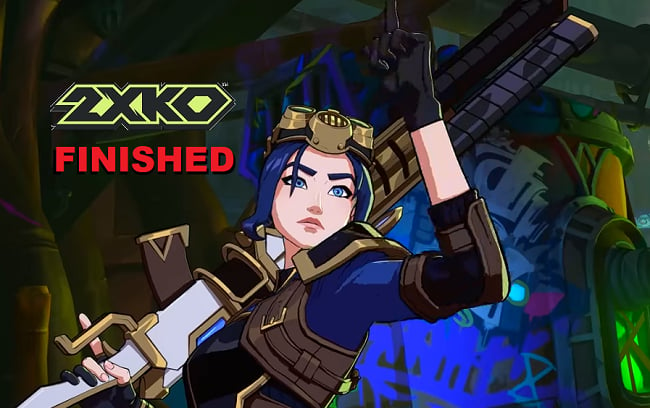
After nearly a decade in development, Riot’s League of Legends fighting game lasted less than a year before the studio pulled the plug, refunded every player, and walked away.
On August 20, 2026, Riot Games dropped a bombshell that few saw coming, even though the warning signs had been there for months. 2XKO, the League of Legends fighting game that spent nearly ten years in development, would end active development in December 2026. Every penny spent in the game would be refunded. All champions would be unlocked for free. And one of the most ambitious fighting game experiments in recent memory would quietly fade into gaming history.
What is 2XKO and why did Riot Games make a fighting game?
2XKO started life as Project L, announced back in 2019. The idea was simple on paper: take the massive League of Legends universe, with its colorful champions and deep lore, and turn it into a 2v2 tag-team fighting game that anyone could pick up and play.
Riot had already conquered the MOBA space with League of Legends and the tactical shooter market with Valorant. A fighting game felt like the next logical step. The studio acquired Radiant Entertainment, a team founded by fighting game legends Tom and Tony Cannon, the same brothers who created the famous GGPO rollback netcode that revolutionized online fighting games.
The vision was ambitious. Riot wanted to solve problems the fighting game community had struggled with for years: unreliable online play, steep learning curves, lonely ranked grinds, and slow update cycles. 2XKO promised rollback netcode from day one, a free-to-play model, frequent updates, and a tag system that let you bring a friend along for the ride.
2XKO at a Glance
- Developer: Riot Games (formerly Radiant Entertainment team)
- Genre: 2v2 tag-team fighting game
- Platforms: PlayStation 5, Windows PC, Xbox Series X/S
- Early Access: October 7, 2025
- Full Launch: January 20, 2026
- Active Development Ends: December 2026
- Metacritic: 81/100 (PC), 78/100 (PS5)
When did 2XKO come out and how was it received?
The game entered early access on October 7, 2025, launching first on PC as a free-to-play title. The response was genuinely positive. Critics praised the tag-team mechanics, the smooth netcode, and the way Riot translated League champions into fighting game archetypes. On Metacritic, the PC version sits at a respectable 81/100, while the PS5 version holds a 78/100.
OpenCritic reported that 100% of critics recommended the game. It was nominated for Best Fighting Game at The Game Awards 2025 and Fighting Game of the Year at the D.I.C.E. Awards. For a brand-new entry in a crowded genre, that is not a bad start at all.
The full console launch arrived on January 20, 2026, bringing PlayStation 5 and Xbox Series X/S into the fold alongside full cross-platform play. Season 1 kicked off with Caitlyn as a new champion, a fresh Battle Pass, and the Frame Perfect competitive skin line that helped fund community tournaments.
Why is Riot Games ending development on 2XKO?
Riot was surprisingly transparent about the decision. In their official announcement, they explained that while plenty of players tried 2XKO, not enough of them stuck around long-term. The game simply could not reach a sustainable player count to justify continued investment.
While a lot of you jumped in to try the game and there’s an incredible community that plays every day, we haven’t seen enough players stick with the game to get to a path toward sustainability.
— Riot Games, August 20, 2026Riot evaluated everything: revenue, retention, new player numbers, and overall engagement. Even major updates like the addition of Akali, Senna, and Thresh, plus the PVE mode “The Climb” and competitive events, only produced temporary spikes. The underlying trend never changed.
The company put it bluntly: “2XKO costs us substantially more to operate than it brings in.” They explored alternatives like shrinking the team, changing patch schedules, and adjusting the business model. In the end, sunsetting active development was the only path that made sense.
The February layoffs were the first warning
Less than three weeks after the console launch, on February 9, 2026, Riot cut approximately 80 roles from the 2XKO team. That was roughly half the global development staff. Executive producer Tom Cannon admitted that player engagement had not met expectations. The game had a dedicated core audience, but the overall momentum was not strong enough to support a team of that size.
At the time, Riot insisted that the 2026 Competitive Series would continue as planned and that affected employees would receive at least six months of severance or opportunities to transfer internally. But the writing was on the wall.
What happens to 2XKO players now?
If you are a 2XKO player, the game is not disappearing entirely. Here is what you need to know:
The servers stay on. Riot has confirmed that 2XKO will remain playable online across all platforms beyond 2026. Offline play is also unaffected. You can still download the game for free on PC, PlayStation 5, and Xbox Series X/S.
Two more champions are still coming. Lux arrives in patch 1.3.1 on September 8, 2026. Samira, the final champion, drops in October with patch 1.3.3. That brings the total roster to 17 characters when everything wraps up.
Ranked mode is being removed. In patch 1.3.1, Ranked lobbies will be disabled. Casual lobbies will still use skill-based matchmaking, and private lobbies are unchanged. The idea is to consolidate the remaining player base into a single matchmaking pool per server.
Battle Passes and seasons are gone. The live service elements, including KO Points, Champion Tokens, seasons, and events, are all being removed. The game is transitioning into what Riot calls an “evergreen” state, a stripped-down version that costs less to maintain.
Voice chat is being added. Interestingly, patch 1.3.1 will add voice chat to large maps and private lobbies, a feature that might have helped retention if it had arrived earlier.
Did Riot refund all the money spent on 2XKO?
Yes. In a move that earned Riot genuine respect from the community, the company announced it would refund every single purchase made in 2XKO on or before August 20, 2026. That includes KO Points, Starter Edition purchases, and all premium currency transactions.
Here is how the refunds work:
Refund Breakdown
- PC players: Refunds go back to the original payment method. Most were expected within two weeks, with all PC refunds completed by November 2026.
- PlayStation & Xbox players: Refunds are processed through Sony and Microsoft platforms respectively. Support teams may contact players to confirm payment details.
- Japan & Korea servers: Refunds follow local legal requirements, with details provided through individual announcements.
- Content kept: Anything you already owned stays in your account permanently.
In addition to refunds, Riot is unlocking all champions for every player and releasing a 2XKO Ultimate Bundle for $39.99 that contains nearly every skin, chroma, and taunt in the game. Many cosmetic items will also become unlockable through earned Credits, with the Credit cap removed entirely.
This is not how game shutdowns usually go. Most studios simply turn off the servers and move on. Riot’s decision to refund everything and leave the game playable speaks to both the company’s financial strength and its desire to preserve goodwill with its community. If you are curious about how other gaming businesses handle money and player trust, this case is worth studying.
What went wrong with 2XKO?
This is the question that will haunt fighting game fans and industry analysts for years. How does a game with an 81 Metacritic score, 100% critic recommendation rate, and the full backing of Riot Games fail to find an audience?
The tag-team niche was too narrow
Riot themselves admitted the core problem in their shutdown post: “Diehard tag fighter players loved 2XKO, but most other fighting game players struggled to find reasons to stick with the game.”
Tag-team fighters have always been a smaller sub-genre. Games like Marvel vs. Capcom have passionate communities, but they do not pull the same numbers as Street Fighter, Tekken, or Mortal Kombat. By building 2XKO around 2v2 tag mechanics from the ground up, Riot may have limited its addressable audience before the first punch was thrown.
The free-to-play model needed more players
Riot went into this knowing that free-to-play only works at scale. The model depends on a massive player base where a small percentage spends money on cosmetics. If the total player pool is too small, even a healthy conversion rate cannot cover server costs, development, and ongoing support.
2XKO had the opposite problem of League of Legends. League can sustain itself with millions of daily players because only a fraction need to buy skins. A fighting game with a smaller, more hardcore audience cannot rely on the same math.
Genre competition was brutal
2XKO launched into one of the most competitive periods in fighting game history. Street Fighter 6 was already established with a massive player base. Tekken 8 had just launched to strong reviews. Mortal Kombat 1 was still drawing crowds. Fatal Fury: City of the Wolves arrived to critical acclaim. Even within the tag-fighter space, competition was fierce.
At Evo 2026, 2XKO was the third-most popular game, behind only Street Fighter 6 and Tekken 8. Being third at the world’s biggest fighting game event sounds impressive, but it also means you are not the game most players are logging into every night.
The long development cycle created impossible expectations
Nearly a decade of development built enormous hype. When a game takes that long, players expect something revolutionary. 2XKO was polished, well-designed, and genuinely fun, but it was not a genre-redefining masterpiece. For many players, it was “just” a very good tag fighter with League of Legends characters. That might have been enough in a quieter year. In 2025 and 2026, it was not.
The February layoffs killed momentum
Cutting half your development team less than a month after console launch sends a powerful signal to the community, and not a positive one. Players who were on the fence about investing time and money into 2XKO saw those layoffs as proof the game was in trouble. Some likely stopped playing right then. The remaining team tried bold updates, but the damage to player confidence was already done.
What can other game developers learn from 2XKO’s failure?
The 2XKO story is not just a tragedy for fighting game fans. It is a case study for anyone making or publishing games. Here are the key lessons:
Genre fit matters more than brand power. Riot has one of the strongest brands in gaming. League of Legends has over 150 million registered players. But that brand strength did not automatically translate into fighting game success. A massive MOBA audience does not guarantee a massive fighting game audience, even when the characters are the same.
Free-to-play needs scale, not just quality. A great free-to-play game with 50,000 active players is still a financial failure. A mediocre one with 5 million players might be a hit. Business model and audience size are inseparable. If you are building a free-to-play game in a niche genre, you need a very clear path to either massive player numbers or a different monetization strategy.
Timing is everything. Launching into a crowded market against established giants is risky for any new IP. 2XKO arrived when players already had multiple high-quality fighting games competing for their attention. Sometimes the difference between success and failure is not the game, but the calendar.
Community confidence is fragile. The February layoffs created a self-fulfilling prophecy. Players lost faith, which reduced engagement, which made the game less sustainable, which justified the layoffs. Public post-launch team cuts can do more harm than the financial savings justify.
Know when to walk away gracefully. Riot’s handling of the shutdown has been unusually respectful. Full refunds, unlocked content, and keeping servers online shows that the company values its relationship with players more than short-term savings. Other studios should take notes. If you are dealing with technical issues in PC games or struggling to retain players, transparency and fairness go a long way.
What is next for Riot Games after 2XKO?
Riot says it will keep exploring new genres and new ways to bring players together. The company is heading “back into the R&D lab” to learn from this experience and come back stronger. That suggests we have not seen the last of Riot’s genre experiments.
For the 2XKO team members who poured years of their lives into this project, the outcome is heartbreaking. For the fighting game community, it is another reminder of how difficult this genre is to break into, even with unlimited resources and one of the biggest brands on Earth.
2XKO will not be the last attempt to bring League of Legends into new genres. But it will likely be remembered as a cautionary tale: sometimes, even when you build something good, give it away for free, and refund everyone when it does not work out, the market still says no.
If you are looking for other games worth playing this year or want to explore different co-op and multiplayer experiences, there are still plenty of great options out there. The fighting game genre is healthier than ever, even if 2XKO will not be part of its future.
Frequently Asked Questions
No. Active development is ending in December 2026, but the servers will remain online and the game will stay playable on all platforms. Offline play is also unaffected. Riot has committed to keeping the game accessible even after development stops.
Yes. Riot is refunding all purchases made on or before August 20, 2026. This includes KO Points, Starter Edition purchases, and all premium transactions. PC refunds go to your original payment method, while console refunds are handled through PlayStation and Xbox support. Anything you already own stays in your account.
Yes. Riot has stated that servers will remain online “beyond 2026” and that offline play is unaffected. While the company reserves the right to change this in the future, there is no current plan to shut down the servers. You can still download and play the game for free.
Critical acclaim does not guarantee commercial success. 2XKO reviewed well because it was a polished, well-designed fighting game. However, it struggled to retain players long-term. The tag-team format appealed mainly to a niche audience, and the free-to-play model required a larger player base than the game could attract. Strong reviews could not overcome those structural challenges.
The launch roster included Ahri, Ekko, Yasuo, Darius, Illaoi, Braum, Jinx, Vi, Blitzcrank, Teemo, and Warwick. Post-launch additions included Caitlyn, Akali, Senna, and Thresh. Lux and Samira are the final two champions, releasing in September and October 2026 respectively, bringing the total to 17 characters.
Riot has not announced any specific plans for another fighting game. The company says it will return to R&D and continue exploring new genres. Given the investment and talent that went into 2XKO, it is possible Riot tries again in the future with a different approach, but nothing is confirmed.
Absolutely. The game is still a solid fighting experience with good netcode, an interesting tag system, and a roster of beloved League of Legends characters. Since it is free and all champions are being unlocked, there is no financial risk in trying it. Just know that no new content will arrive after December 2026.
2XKO’s main differentiator is its 2v2 tag-team system, where players control two characters and can swap between them dynamically during matches. It also features the Fuse system, which lets players customize how their duo works together. The game was built with rollback netcode from the start and was entirely free-to-play, which separated it from most premium fighting games on the market.