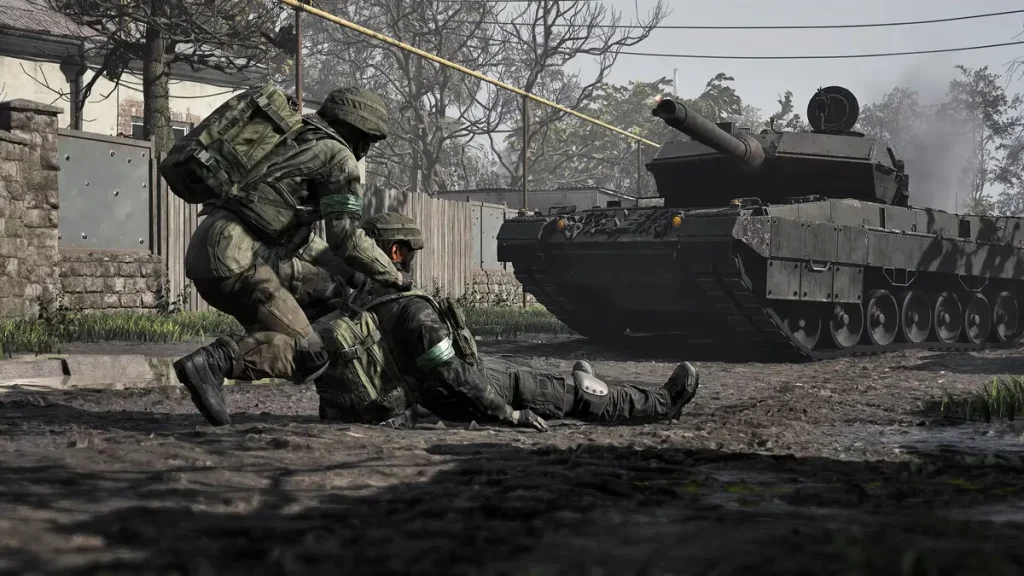
On September 10, 2026, a 100-player tactical shooter from a Derby studio most players had never heard of entered Steam Early Access and sold two million copies before the weekend ended. The queue to get in was 276,000 people deep. The servers melted. The reviews turned. And a CEO who had spent a decade trying to make a shooter that mattered suddenly had the biggest problem in gaming: too much success, too fast, with too little infrastructure to hold it. This is the story of what happens when a studio’s dream becomes a infrastructure nightmare.
At 6:00 PM CEST on Thursday, September 10, 2026, WARDOGS went live on Steam Early Access. Within hours, 276,000 players were staring at a queue screen. Not a login error. Not a crash. A queue. A number ticking down, slowly, while somewhere in Derby, England, a server rack that had been configured for a “controlled, phased rollout” was learning what it felt like to be hit by a digital tsunami.
By midnight, WARDOGS had sold 1.25 million copies. By Sunday, it had peaked at 428,666 concurrent players, making it the third most-played game on Steam, behind only Counter-Strike 2 and Dota 2. It was the #1 best-selling game on the platform. It had outsold Call of Duty’s pre-launch buzz. It had outrun Marvel Rivals. And the Steam reviews said “Mixed.”
This is not a story about a bad game. WARDOGS, by most accounts from the people who actually got in, is good. It is a 100-player tactical shooter that sits somewhere between Battlefield’s spectacle and ARMA’s lethality, with a three-team Control Zone format, persistent cash economies, destructible environments, and a “laid-back milsim” sensibility that has found an audience starved for something that takes shooting seriously without demanding a military cosplay commitment. The problem is not the game. The problem is what success at this scale does to a studio that has never had it.
Part I: Who is BULKHEAD, and why had nobody heard of them?
BULKHEAD Interactive was founded in 2015 in Derby, England, by five graduates of the University of Derby who formed the studio days after graduating. The company was born from the merger of two tiny indie outfits, Deco Digital and Bevel Studios, who had been sharing an office and dreaming of making something that mattered. Their first game, Pneuma: Breath of Life, was a first-person puzzler for Xbox One. It was fine. It did not set the world on fire.
What came next defined the studio’s trajectory for a decade. In 2016, BULKHEAD launched a Kickstarter for Battalion 1944, a competitive World War II shooter pitched as a spiritual successor to Call of Duty 2 and Medal of Honor: Allied Assault. The campaign hit its goal in days and eventually raised over £300,000. The dream was specific: a return to the golden age of competitive FPS, stripped of killstreaks and loadout bloat, where gun skill and map knowledge determined outcomes.
The reality was messier. Battalion 1944 entered Early Access in 2018 to mixed reception. The gunplay was tight, the maps were solid, but the player base fragmented quickly, the matchmaking struggled, and the console versions, promised as part of the Square Enix Collective publishing deal, never materialized. Square Enix had bought a 20% stake in BULKHEAD in 2018, but by 2022 the relationship was over. BULKHEAD announced it was ending the partnership, citing Square Enix’s failure to release the console versions.
The BULKHEAD corporate odyssey
- 2015: Founded in Derby by five University of Derby graduates
- 2016: Battalion 1944 Kickstarter raises £300K+
- 2018: Square Enix buys 20% stake; Battalion enters Early Access
- 2022: Ends Square Enix partnership; acquired by Splash Damage
- 2022-2024: Works on Transformers: Reactivate; project cancelled, layoffs follow
- 2024: Splash Damage acquired by Tencent; BULKHEAD goes with it
- December 2025: Tencent sells BULKHEAD to new consortium (SMG, Everplay/Team17 parent, Hiro Capital)
- September 2026: WARDOGS launches into Steam Early Access
The studio’s history since Battalion has been a tour through the modern game industry’s consolidation machinery. Acquired by Splash Damage in 2022. Absorbed into Tencent’s empire when Splash Damage was bought. Spun back out in December 2025 when a new consortium, backed by Team17’s parent company Everplay Group, acquired the studio. Through it all, CEO Joe Brammer kept saying the same thing: we are going to make the next must-play shooter. After a decade of near-misses, corporate ownership changes, and a cancelled Transformers game that cost people their jobs, that promise sounded like standard founder bravado. Until September 10, when two million people decided to find out if he was right.
Part II: The queue that ate launch day
Here is what BULKHEAD thought was going to happen. WARDOGS had accumulated 1 million Steam wishlists before launch. The betas had been well-attended but manageable. The studio had planned what it called a “controlled, phased rollout,” admitting players in batches to ensure server stability. This is a reasonable approach for a studio with ~100 employees launching its first 100-player live service. It is also an approach that works only if the number of people who want to play is somewhere in the neighborhood of what you expected.
It was not.
At 6:00 PM CEST, the doors opened. By 6:30, the queue was already in six figures. By 7:00, 276,000 players were waiting. Not to buy the game. They had already bought it. They were waiting to be allowed to use the thing they had paid for. The queue system, designed to manage a gradual entry, became a wall. Players reported wait times of over an hour. Some reported being kicked from the queue and sent to the back of the line. Others got in, played for twenty minutes, and were disconnected, only to rejoin the queue at position 180,000.
We either fix the queue now or we’re f***ed.
— Howard Philpott, UI/UX Director, BULKHEAD, September 13, 2026The technical explanation for what went wrong is a cascade failure. WARDOGS runs on Unreal Engine 5 with dedicated servers handling 100-player matches across three teams. The server infrastructure had been scaled for the beta population, which peaked in the tens of thousands. The launch population was an order of magnitude larger. The matchmaking service, which needs to assemble 100 players of roughly similar skill into a lobby, was overwhelmed by the sheer volume of concurrent connection requests. The authentication layer, which verifies Steam ownership before allowing entry, hit Valve’s rate limits. The queue system, intended as a pressure valve, became the primary user experience for the game’s first 24 hours.
BULKHEAD’s response was immediate and, by the standards of live service launches, reasonably competent. Launch Stability Hotfix #1 dropped within hours. It addressed failed server joins, unexpected kicks, and extended login queues. But the fix introduced its own problem: to apply it, players had to close the game and download an update, which meant leaving their place in the queue, which meant starting over. The hotfix that was supposed to solve the queue made the queue worse for everyone who was already in it.
By Friday morning, WARDOGS had a “Mixed” review rating on Steam. Not because the game was bad. Because the game was inaccessible. The review section filled with thousands of identical complaints: “Can’t get in.” “Queue simulator 2026.” “Paid $40 to stare at a number.” Some players reported that influencers and streamers seemed to be getting priority access, jumping queues while regular buyers waited. BULKHEAD denied this, but the perception was enough. When you have paid for a product and cannot use it while watching someone else play it on Twitch, the feeling is not disappointment. It is betrayal.
Part III: What WARDOGS actually is, when you get past the queue
For the players who made it through, or who came back after the initial storm, WARDOGS revealed itself as something genuinely interesting: a 100-player tactical shooter that bridges the gap between milsim purism and arcade accessibility.
The format is three-team Control Zone. One hundred players, divided into three factions, fight over a single contested area on a massive destructible map set in the derelict industrial mountains of Eastern Europe. The twist is the persistent cash economy. Every player starts with $10,000. You earn more by capturing zones, getting kills, assisting teammates, and completing objectives. You spend it on better weapons, vehicles, equipment, and fortifications. Die, and you lose what you were carrying. Survive and extract, and you keep your earnings for the next match.
This is not a new idea. ARMA 3’s King of the Hill mod has been doing large-scale zone control for years. Squad and Hell Let Loose have refined the team-based tactical shooter. Escape from Tarkov pioneered the persistent gear-economy tension. What WARDOGS does is combine these elements into a package that does not require a 500-hour commitment to understand. PC Gamer’s Morgan Park described it as “inspired by Arma but plays like Battlefield.” Sportskeeda called it “a laid-back milsim experience for battledads.” The destructible environments mean that cover is temporary, buildings collapse, and the map evolves over the course of a match. The three-team format means that the dominant faction can be suddenly flanked by a third party that has been waiting for the right moment.
| Feature | WARDOGS Approach |
|---|---|
| Player Count | 100 players across 3 teams |
| Game Mode | Control Zone (King of the Hill variant) | Economy | Persistent cash, $10K start, lose gear on death |
| Environment | Fully destructible buildings and terrain |
| Vehicles | Ground transport, armor, aerial support |
| Engine | Unreal Engine 5 |
| Price | $39.99 (Early Access) |
The critical reception, once reviewers could actually play it, has been solid. GameBrief scored it 7.8/10, praising the “3-team Control Zone format” for producing “matches that never settle into the predictable two-sided tug-of-war.” The systemic depth, the way cash, construction, and destruction interact to create emergent moments, is the game’s genuine achievement. A team that fortifies a building with sandbags and mounted guns can hold off superior numbers, until an enemy tank collapses the wall, or an enterprising player sneaks through a newly created hole and knifes three people from behind.
The problems that exist are the problems of Early Access. The anti-cheat system, which BULKHEAD switched to Elytra shortly before launch, has generated controversy over kernel-level access and privacy concerns. CEO Joe Brammer’s statement that the $40 price tag is “the best anti-cheat” was widely mocked, though it contains a kernel of truth: free-to-play games face exponentially more cheating problems because the barrier to creating a new account is zero. Team switching mid-match has become a plague, with players joining the winning side to farm rewards, or infiltrating enemy teams to sabotage from within. False bans have been reported and, to BULKHEAD’s credit, addressed. Steam Family Sharing was disabled to prevent cheaters from cycling through free alt accounts.
These are solvable problems. They are also the exact problems that have killed other live service shooters in their first month. The difference is that WARDOGS has two million paying customers already invested, rather than a free-to-play population that will drift away at the first sign of trouble.
Part IV: The review bomb, and what it actually means
WARDOGS was review-bombed within hours of launch. By the end of day one, its Steam rating was “Mixed.” By day three, after the queue crisis had been largely resolved and hundreds of thousands of players had actually experienced the game, it had climbed to “Very Positive.” This is one of the fastest review recoveries in Steam history, and it tells an important story about what review bombs are and are not.
The initial negative reviews were almost entirely about access, not quality. “Cannot connect.” “Queue is broken.” “Paid $40 for a loading screen.” These are legitimate complaints. If you buy a game and cannot play it, you have been wronged. But they are not reviews of the game. They are reviews of the launch infrastructure. And Steam’s review system, which conflates “this product did not work when I bought it” with “this product is bad,” is not designed to make that distinction.
The review bomb paradox: WARDOGS demonstrates how Steam’s review system can punish a studio for being too successful too fast. A smaller launch, one that the servers could handle, would have produced a higher initial review score. The queue crisis was a direct result of demand exceeding even optimistic projections. The punishment for building something people desperately want to play is that the people who cannot play it immediately will warn others away.
The recovery to “Very Positive” matters because it suggests the underlying game has legs. Players who stayed, who waited out the queue or came back after the hotfixes, are finding something worth recommending. As of this writing, WARDOGS sits at approximately 70% positive out of over 32,000 reviews, with the trend line moving upward as queue-related negatives age out and gameplay-positive reviews accumulate. For an Early Access launch that began with a server meltdown, this is a genuinely impressive trajectory.
But the review bomb left a mark. WARDOGS’ overall rating still carries the shadow of launch day. Potential buyers scrolling through Steam see a game that was “Mixed” at one point and wonder if the problems persist. The initial narrative, “this game is broken,” outran the correction, “this game was temporarily inaccessible and is now mostly fine.” In the attention economy of Steam, first impressions are not just important. They are often the only impression.
Part V: The live-service time bomb question
So is WARDOGS a genuine hit or a live-service time bomb? The honest answer is that it is too early to know for certain, but the evidence points in a specific direction. To understand why, you have to look at what kills live service games in their first year.
Live service games die for four reasons, usually in combination: technical collapse, content drought, cheating epidemics, and monetization greed. WARDOGS has faced the first and is managing the third. The second and fourth are where the real test lies.
Technical collapse: The launch queue crisis was a technical failure, but it was a failure of scale, not a failure of architecture. BULKHEAD’s servers did not have a fundamental design flaw. They were under-provisioned for demand that exceeded projections by a factor of ten. That is a capacity problem, not a code problem. Capacity problems are expensive but solvable. You buy more servers. You optimize matchmaking. You negotiate higher rate limits with Valve. By day three, controlled batch entry was working. By day five, most players could get in within minutes. The technical story of WARDOGS’ launch is not Cyberpunk 2077. It is Fall Guys: a game that broke under its own popularity, then fixed itself.
Cheating: This is the bigger concern. The switch to Elytra anti-cheat, the false bans, the team-switching exploit, the disabling of Family Sharing: all of these are early warning signs. A tactical shooter with persistent gear and cash economy is a cheater’s paradise. If players can buy their way to better equipment, then cheat to protect it, the legitimate player base will evaporate. BULKHEAD’s response so far has been proactive but reactive. They are banning cheaters. They are patching exploits. They are adjusting the anti-cheat. But the question is whether they can stay ahead of the cheat developers, who now have two million potential customers motivated to gain an edge. The $40 price tag is a deterrent, not a solution. Deterrents slow problems. They do not solve them.
Content drought: Early Access lives or dies on its roadmap. WARDOGS has Season 1 live now, with a battle pass, new weapons, and map adjustments. But the history of BULKHEAD’s previous live service, Battalion 1944, is not encouraging. That game suffered from a lack of post-launch content, a fragmented player base, and a development team that seemed to lose focus as corporate ownership changed around them. The difference is resources. Battalion was an indie game with indie funding. WARDOGS has Team17’s publishing muscle, a consortium-backed studio, and two million units of revenue already in the bank. Whether that money translates to a sustained content pipeline depends on whether the consortium views WARDOGS as a long-term franchise or a profitable exit.
Monetization greed: So far, WARDOGS has avoided the worst excesses. The $40 Early Access price is reasonable for the amount of game on offer. The Season 1 battle pass is cosmetic-only. There are no pay-to-win weapon upgrades, no loot boxes, no $20 skin packs. But it is Early Access. The monetization model is not finished. And the pressure from publishers to “optimize” revenue from a player base this large will be immense. Team17 has a history of aggressive DLC strategies. The consortium that owns BULKHEAD includes Everplay Group, Team17’s parent. If WARDOGS’ cash shop starts selling weapon blueprints that bypass the in-game economy, the game dies. Not immediately. But slowly, as the core audience realizes that the grind is there to sell shortcuts.
The time bomb, if there is one, is not the queue. The queue was a fire that BULKHEAD has mostly put out. The time bomb is the combination of cheating, content, and monetization pressures that every live service faces after the launch honeymoon ends. In six months, we will know whether WARDOGS is Helldivers 2, which recovered from a rough launch to become a sustained hit, or Babylon’s Fall, which had a big opening and nobody remembers it now.
Part VI: The BULKHEAD question, and why it matters for British game development
There is a broader story here about British game development and what happens when a mid-sized UK studio finally breaks through. BULKHEAD is not a startup. It is a ten-year-old company that has survived multiple publishers, two acquisitions, one cancellation, and at least one round of layoffs. Its CEO, Joe Brammer, has been giving interviews about changing the shooter genre since 2018. The studio has been named one of the UK’s “Best Places to Work” by GamesIndustry.biz for two consecutive years. These are not amateurs.
And yet, the queue crisis revealed something about the gap between “good at making games” and “good at operating live services at scale.” These are different skills. Making a shooter with tight gunplay and interesting systemic design is one thing. Running a global server infrastructure that handles half a million concurrent players, with matchmaking, anti-cheat, authentication, and content delivery, is another thing entirely. BULKHEAD had never done it before. No one at the studio had ever launched a game this big. The “controlled phased rollout” plan suggests they knew they were not ready for a tsunami. They just did not know how big the tsunami would be.
The British game industry has a long history of this specific problem. Creative Assembly made excellent strategy games for years before grappling with the live service demands of Hyenas. Rocksteady made some of the best single-player action games of the last decade before the live service disaster of Suicide Squad. The UK produces exceptional game makers. It has not historically produced exceptional live service operators. The infrastructure, the operational discipline, the post-launch content machinery: these are things that American and Chinese publishers have spent billions building. A 100-person studio in Derby does not have that institutional knowledge. It has to learn it in real time, while half a million people scream at it on Twitter.
BULKHEAD’s escape from Tencent may ultimately be the thing that saves it. Under Tencent, the studio was part of a corporate machine that expected certain returns, certain timelines, certain metrics. The new consortium, backed by Hiro Capital and Everplay, has given BULKHEAD independence with publishing support from Team17. CEO Joe Brammer told GamesIndustry.biz that the break from Tencent forced the studio to recalibrate its definition of success. “They wouldn’t look at any game that was less than £50 million,” he said of Tencent’s investment criteria. WARDOGS is not a £50 million game. It is a focused, $40 tactical shooter made by a team that knows what it is good at. The fact that two million people wanted to play it suggests that focus was the right call.
But focus does not replace infrastructure. And infrastructure is what WARDOGS needs now. Not more marketing. Not more influencers. Not more battle pass tiers. Better servers. Better anti-cheat. Better tools for community management. The boring, expensive, unglamorous work of keeping a live service alive. If BULKHEAD can do that work, WARDOGS has the player base, the revenue, and the design foundation to be a genuine long-term hit. If they cannot, the queue on launch day will be remembered as the moment the game peaked.
The verdict: genuine hit, with live-service conditions
WARDOGS is a genuine hit. Two million copies in five days is not a fluke. A peak of 428,666 concurrent players is not a bot campaign. A recovery from “Mixed” to “Very Positive” on Steam is not astroturfing. The game is finding an audience because it offers something that has been missing from the shooter landscape: large-scale tactical combat that respects your time and your intelligence without demanding that you treat it like a second job.
But it is a hit with conditions. The queue crisis was a warning. The cheating problems are a warning. The Early Access status is a warning. WARDOGS has bought itself time and money with this launch, but it has not bought itself immunity from the live service graveyard. The next six months will determine whether it becomes a permanent fixture in the Steam top ten or a cautionary tale about what happens when a studio’s ambition outpaces its operational maturity.
The irony is that BULKHEAD spent a decade trying to get people to care about their shooters. Now they have half a million people who care very much, every day, and the studio is learning that attention is not always a gift. Sometimes it is a stress test. WARDOGS passed the first one, barely, after setting its own servers on fire. The next tests are coming. The queue was just the opening round.
For players, the calculation is simple. At $40, WARDOGS is a good bet if you want a tactical shooter with genuine systemic depth and do not mind the Early Access rough edges. The queue crisis is largely resolved. The game is playable. The matches, when they work, produce moments that explain why two million people bought in. Just keep an eye on the roadmap. And maybe do not buy the battle pass until you see what Season 2 looks like. We have all been burned before.
Frequently Asked Questions
WARDOGS is a 100-player tactical FPS developed by BULKHEAD and published by Team17. It features three teams fighting over a single Control Zone on a large destructible map, with a persistent cash economy where players start with $10,000, earn more through objectives and kills, and lose their gear on death. It is inspired by ARMA 3’s King of the Hill mod but designed to be more accessible than traditional milsim games.
BULKHEAD is a British game developer founded in 2015 in Derby, England, by five University of Derby graduates. They are best known for Battalion 1944, a World War II competitive shooter that had a troubled Early Access run. The studio has been through multiple ownership changes: independent, then partially owned by Square Enix, then acquired by Splash Damage, then absorbed into Tencent’s portfolio, and finally spun out in December 2025 to a new consortium backed by Team17’s parent company. They employ approximately 100 people.
On September 10, 2026, WARDOGS launched into Steam Early Access and immediately overwhelmed BULKHEAD’s servers. At its peak, 276,000 players were stuck in a login queue, with wait times exceeding an hour. The problem was caused by demand far exceeding BULKHEAD’s “controlled phased rollout” projections, combined with matchmaking overload and Valve authentication rate limits. Launch Stability Hotfix #1 was released within hours, but required players to restart and rejoin the queue. The crisis was largely resolved within 48-72 hours.
WARDOGS sold 1.25 million copies in under 24 hours and passed 2 million copies in less than five days. It peaked at 428,666 concurrent players on Steam, making it the #3 most-played game on the platform behind Counter-Strike 2 and Dota 2, and the #1 best-selling game on Steam at launch.
Critical and player reception, once the queue crisis was resolved, has been positive. WARDOGS recovered from an initial “Mixed” Steam rating to “Very Positive” within days. Reviewers praise the three-team Control Zone format, the persistent cash economy, destructible environments, and the “laid-back milsim” approach that bridges the gap between Battlefield spectacle and ARMA realism. GameBrief scored it 7.8/10. Common criticisms include Early Access roughness, anti-cheat concerns, and team-switching exploits.
WARDOGS has faced several cheating-related issues since launch. The studio switched to the Elytra anti-cheat system, which generated controversy over kernel-level access. False bans were reported and later addressed. A significant problem is team-switching mid-match, where players join the winning side to farm rewards or infiltrate enemy teams to sabotage them. CEO Joe Brammer disabled Steam Family Sharing and claimed the $40 price tag is “the best anti-cheat” because it raises the barrier for alt accounts. BULKHEAD has been actively banning cheaters and patching exploits.
It is too early to say definitively, but the evidence is mixed. On the positive side: 2 million paying customers, a “Very Positive” Steam recovery, solid core gameplay, and reasonable monetization so far. On the concerning side: ongoing cheating problems, the studio’s lack of experience operating at this scale, the Early Access status, and the historical shadow of Battalion 1944’s post-launch struggles. The next six months of content updates, anti-cheat effectiveness, and monetization decisions will determine whether WARDOGS becomes a sustained hit or a launch-week phenomenon.
BULKHEAD’s first live service attempt, Battalion 1944, entered Early Access in 2018 to mixed results. The game had solid gunplay but suffered from player base fragmentation, matchmaking issues, and a lack of post-launch content. Console versions were cancelled. The studio then worked on Transformers: Reactivate, which was cancelled, leading to layoffs. WARDOGS is BULKHEAD’s second live service launch and its first at this scale. The studio has never operated a game with hundreds of thousands of concurrent players before.
Some players accused BULKHEAD of giving influencers and streamers priority access to servers while regular buyers waited in queue. BULKHEAD denied this. The perception may have been fueled by the fact that streamers were live-playing the game while ordinary users were stuck in six-figure queues, but this was likely due to streamers logging in earlier or having pre-launch access codes rather than a formal VIP system. The controversy added to the launch-day frustration.
WARDOGS is priced at $39.99 on Steam Early Access for PC. It is not free-to-play, which BULKHEAD argues helps reduce cheating by raising the cost of creating new accounts. The game includes a Season 1 battle pass with cosmetic rewards. There are currently no pay-to-win weapon or equipment purchases.
BULKHEAD has not announced a specific date for WARDOGS to leave Early Access. The game is currently in Season 1 with a content roadmap that includes additional weapons, map updates, and quality-of-life improvements. Given the scale of the launch and the ongoing infrastructure work, a full 1.0 release is likely months away. Early Access timelines for successful live service games typically range from 6 months to 2 years.