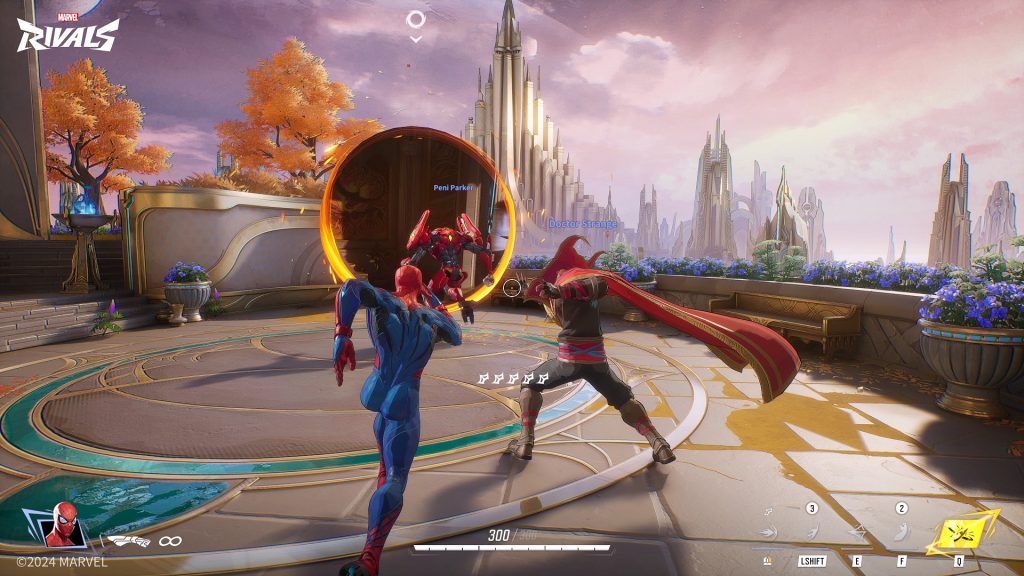
NetEase’s hero shooter exploded to 644,000 concurrent players in January 2025. Eighteen months later, the ranked ladder is a broken meta graveyard, the esports scene is a drama factory, and the balance team has lost the room. A play-deep report from inside the collapse.
Marvel Rivals should have been the game that finally broke the hero shooter curse. It launched in December 2024 to genuine excitement: a 6v6 team shooter with a recognizable IP, solid gunplay, destructible environments, and a roster of Marvel characters that actually played differently from one another. Within three days it had 10 million players. By January 2025 it peaked at 644,333 concurrent players on Steam, a number that put it in the same conversation as Counter-Strike and Dota 2. NetEase had made the breakout hit of the year.
Then the competitive scene ate itself.
I played Marvel Rivals for 200 hours across Season 6 through Season 9.5, grinding ranked from placement matches through Diamond lobbies, sitting through the disastrous balance passes, watching the tournament meltdowns, and experiencing firsthand what happens when a hero shooter releases new characters faster than it can balance them. The game that felt fresh and full of potential at 20 hours feels exhausted and cynical at 200. The meta is not just broken. It is broken by design, by schedule, and by a monetization strategy that treats competitive integrity as an afterthought.
This is what Marvel Rivals’ competitive scene actually looks like in August 2026, and why the rot goes deeper than any single balance patch can fix.
The launch honeymoon: why it worked
To understand why Marvel Rivals’ competitive decline hurts, you have to remember why the game worked at launch. The core loop was immediately satisfying. A 6v6 hero shooter with three roles: Vanguard (tank), Duelist (DPS), and Strategist (support). Team-ups that rewarded composition creativity. Maps with verticality and destructibility. And a free-to-play model that seemed, on the surface, fairer than its competitors.
The character designs were the secret weapon. Not just because they were Marvel icons, but because they felt distinct. Magik played nothing like Punisher. Mantis played nothing like Rocket Raccoon. Peni Parker brought a mech-combat rhythm that no other hero shooter had successfully integrated. At launch, the roster was small enough that NetEase could plausibly balance it, and the player base was large enough that matchmaking could find fair games quickly.
For the first hundred hours, Marvel Rivals felt like the future of the genre. The shooting was crisp. The abilities were readable. The team fights had a flow that Overwatch 2 had lost and Valorant never tried to have. If you had told me in January 2025 that this game would be bleeding competitive players eighteen months later, I would not have believed you.
Why Marvel Rivals Worked at Launch
- Recognizable Marvel IP with distinct hero identities
- 6v6 format with clear role definitions and team-up synergies
- Destructible environments and vertical map design
- Free-to-play with a seemingly fair monetization model
- Small, manageable launch roster for balance
- Strong spectator appeal for streaming and esports
The character treadmill: a new hero every month breaks everything
The first crack in Marvel Rivals’ competitive foundation appeared early. Starting in Season 3, NetEase committed to releasing at least one new character every month. On paper, this was a content strategy designed to keep the game fresh, drive battle pass sales, and maintain social media buzz. In practice, it was a competitive suicide pact.
No balance team in the world can properly integrate, test, and tune a new hero every thirty days in a game with dozens of existing abilities, team-up combinations, and map interactions. The result was predictable and immediate: every new character launched either undertuned and ignored, or overtuned and mandatory. There was no middle ground because there was no time to find one.
By Season 6, the roster bloat had become unmanageable. The “lesser-known character” problem that critics identified with Elsa Bloodstone in February 2026 was not about Elsa specifically. It was about a game that had stopped curating its roster and started pumping it. When you release a new hero every month, you are not expanding a competitive ecosystem. You are running a content treadmill that throws the existing meta into chaos with every lap.
The competitive damage was structural. Players could not develop deep mastery of matchups because the matchup landscape changed monthly. Teams could not build consistent strategies because the hero pool was in constant flux. And the ban system, which should have been a safety valve for overpowered releases, became a band-aid on a hemorrhage.
The balance team has lost the room
By February 2026, the community had turned on Marvel Rivals’ balance team. Season 6.5’s balance pass was so poorly received that fans were publicly demanding the lead combat designer step down. The patch buffed heroes that were already dominant, ignored heroes that had been weak for months, and introduced changes that felt disconnected from how the game actually played at a high level.
Today’s patch notes have made me lose all hope.
— Marvel Rivals player reaction to Season 6.5 balance changes, February 2026The problem was not just one bad patch. It was a pattern. Season 8.5 was hailed as NetEase’s “best attempt at competitive balance,” a carefully considered pass that finally addressed some of the community’s long-standing concerns. Then Season 9 arrived in July 2026 and did what players called a “complete 180.” Flamethrowing sharks. Lethal dive compositions. Ridiculous crowd-control counters. The buffs went to heroes that were already strong, the nerfs missed the actual pain points, and the meta dissolved into the same chaos that 8.5 had supposedly fixed.
PC Gamer’s July 2026 headline said it plainly: Marvel Rivals had “upset players yet again with some peculiar balances that buff some of the strongest heroes.” The word “peculiar” is doing a lot of work there. What it means is that the balance team appears to be operating without a coherent philosophy. One season they tune for competitive integrity. The next they tune for spectacle. The result is a meta that nobody can predict, trust, or master.
| Season | Balance Philosophy | Community Reaction |
|---|---|---|
| Season 6 | New hero drops, Deadpool fills all three roles | Excited but concerned about bloat |
| Season 6.5 | Disastrous pass, buffs strong heroes | “Made me lose all hope” |
| Season 8.5 | “Best attempt at competitive balance” | Cautiously optimistic |
| Season 9 | Complete 180, chaos meta | “Flamethrowing sharks, lethal dive comps” |
| Season 9.5 | August 2026 patch, “not everyone is happy” | Fatigue and resignation |
The ban system is not a safety valve. It is a confession of failure.
Marvel Rivals’ ban system was supposed to give the community a tool to self-correct the meta. If a hero was overtuned, players could ban them. If a strategy was oppressive, teams could remove it from their games. In theory, bans create a dynamic meta where player choice shapes the competitive landscape. In practice, Marvel Rivals’ bans have become a weekly report card on NetEase’s balance failures.
As of August 2026, the most-banned heroes tell a clear story. Black Panther is the most banned hero in the game, a mobile dive assassin who dominates ranked at every tier. Peni Parker is the most-banned Vanguard, sitting at approximately a 56.3% win rate in competitive play. Gambit is the most-banned Strategist. Mantis and Rocket Raccoon remain permanent fixtures in high-level team compositions, not because they are fun to play against, but because not having them means losing.
The support role has been hit hardest. In March 2026, support mains were already furious over constant hero bans targeting their role. Cloak, Dagger, and Luna Snow were being insta-banned, making the support experience miserable for players who had invested time mastering those heroes. Eight months later, the problem has not been solved. It has been normalized. Support players in Marvel Rivals have learned to expect that their favorite heroes will be banned, their impact will be minimized, and their role will be blamed when the team loses.
The ban rate problem: When the same heroes are banned week after week after week, the ban system is not creating a dynamic meta. It is permanently removing the most broken elements because the balance team will not. Bans have become a substitute for patches.
Ranked is an unbalanced mess and the matchmaking is broken
At the 200-hour mark, I can tell you exactly what Marvel Rivals ranked feels like in August 2026. It feels like a coin flip dressed as a skill test.
The matchmaking issues are not subtle. Steam discussion threads from mid-2026 are filled with veterans describing competitive games that feel decided before the spawn doors open. Not because one team has better players, but because one team has the current meta stack and the other does not. When Peni Parker, Mantis, and Magik are all available and one team insta-locks them while the other team is still arguing about who has to play support, the outcome is largely predetermined.
The role queue system, which should prevent this, has been undermined by the hero bloat and balance chaos. With so many heroes in the pool and so few slots on a team, the difference between having the S-tier picks and not having them is larger than the difference between individual player skill. A Diamond player on a weak hero will lose to a Platinum player on a broken one. That is not a competitive game. That is a draft lottery.
One 850-hour veteran posted a detailed farewell to the Steam community in 2026, citing matchmaking and balance issues as the reasons for leaving. When players with that much time invested are walking away, the problem is not that the game is too hard. It is that the game has stopped rewarding the things that competitive players value: consistency, mastery, and fair tests of skill.
Final Feedback from an 850-Hour Veteran: Leaving the Game Due to Matchmaking and Balance Issues.
— Steam community post, Marvel Rivals, 2026The esports scene: $3 million in prize money, zero integrity
NetEase has big plans for Marvel Rivals esports in 2026. The official roadmap promises five Championships between March and December, a guaranteed $3 million prize pool, and a grand finals stage in Atlanta. The Marvel Rivals Ignite 2026 circuit is supposed to be the professionalization of the scene, complete with a Partner Teams Program and unified regional leagues.
The reality has been a non-stop drama factory that undermines every attempt at legitimacy.
The $300,000 World Cup meltdown
In June 2026, the inaugural Marvel Rivals Creator World Championship brought twelve elite teams to compete for a $300,000 prize pool. It should have been a showcase. Instead, Team Canada imploded on stream when a player named Warn refused to switch heroes during a match, sparking a public team dispute that played out live in front of thousands of viewers. The team finished last. The clip went viral. And the headline that summed it up was brutal: “I got Zazza’d in a tournament 10x the prize pool.”
The $40,000 team call dispute
Months earlier, in January 2026, a streamer was booted from a $40,000 Marvel Rivals tournament for asking a teammate to switch heroes. The dispute was over team composition and hero selection, the exact issue that the ban system and role queue were supposed to prevent. Instead, it became a tournament-destroying scandal that ended with a player removal and community outrage.
The Kingsman265 ban controversy
The competitive scene’s integrity took another hit with the Kingsman265 controversy, in which a player was banned amid accusations and counter-accusations that exposed how poorly NetEase’s competitive infrastructure handled disputes, evidence, and appeals. When your esports program cannot adjudicate a player ban without turning it into a community-wide conspiracy theory, you do not have an esports program. You have a reality show.
The competitive integrity briefing: An August 2026 analysis warned that “live in-play odds exposure is threatening tournament play.” When betting markets are more stable than your competitive rulings, your esports scene has a foundational problem that prize money cannot fix.
NetEase wants Marvel Rivals to be an esport. It has the money, the viewership potential, and the character IP to make that work. What it does not have is a competitive environment stable enough to deserve the title. You cannot build a professional scene on a meta that changes direction every season, a balance team that contradicts itself, and a tournament infrastructure that generates more drama than highlights.
Monetization pressure: the battle pass that competes with the player
Marvel Rivals’ monetization has been a slow-burning controversy since launch. On the surface, the game appeared generous: battle passes that do not expire, no pay-to-win items, cosmetics only. Underneath, the progression systems have been grinding players down.
The battle pass uses a challenge-based progression system instead of rewarding XP for matches played. This means players must complete specific tasks to advance, tasks that often force particular heroes, playstyles, or game modes. A competitive player who wants to climb ranked with their main hero is constantly pulled away by battle pass challenges demanding they play characters they do not enjoy in modes they do not care about.
Progression is awful, this is not a mobile game.
— PC Gamer headline on Marvel Rivals battle pass complaints, December 2024The currency system is another layer of friction. Marvel Rivals operates with three currencies: Units, Lattice, and Chrono Tokens. Each has distinct purposes, distinct earn rates, and distinct purchase options. The result is an economy that feels designed to confuse more than reward. Players regularly complain that the battle pass takes too long to complete, that the free track is stingy, and that the return of old battle passes at inflated prices feels like a cash grab rather than a service.
In September 2025, datamined leaks suggested NetEase was preparing to introduce randomized monetization, potentially bringing loot boxes back into the game despite earlier assurances that the system had been scrapped. The controversy reignited the pay-to-win debate, even though the proposed loot boxes were cosmetic. In a competitive game with declining player trust, any move toward randomized monetization reads as a signal that the company is extracting what it can before the population collapses.
Then there is the framerate bug. In late 2024, players discovered that certain characters performed worse at lower framerates, creating a situation where players with better hardware had a subtle but real competitive advantage. Kotaku reported that fans were calling the game “pay to win” not because of any purchased item, but because higher-end PCs produced better performance. When your monetization is not technically pay-to-win but your technical optimization creates a hardware-based advantage, the competitive integrity problem is the same.
The player count: a hero shooter bleeding out in slow motion
Marvel Rivals’ Steam numbers tell a story that the Marvel IP cannot hide. The all-time peak of 644,333 concurrent players in January 2025 was genuine, impressive, and deserved. The current 24-hour peak of roughly 100,000 in August 2026 is a 84-86% decline from that high.
The trajectory is not a straight line. Seasonal launches create predictable bumps. Deadpool in Season 6, new balance passes, tournament events, all of them produce temporary spikes. But the baseline keeps dropping. Season 4 in September 2025 launched to the lowest day-one player count in the game’s history. By August 2026, the monthly average sits around 80,000 players on Steam, with concurrent numbers hovering in the 90,000-100,000 range.
For a normal game, 100,000 concurrent players would be a massive success. For a game that peaked at 644,000 eighteen months ago, it is a warning sign. Hero shooters live or die on matchmaking speed and match quality. When your population drops by 85%, both of those things degrade. Queue times get longer. Skill variance in lobbies gets wider. The ranked experience gets worse. And the worse it gets, the more players leave.
| Period | Avg Steam Players | Peak Players |
|---|---|---|
| January 2025 (Launch Peak) | — | 644,333 |
| September 2025 (Season 4) | — | Lowest day-one ever |
| April 2026 | ~70,100 | — |
| May 2026 | ~67,600 | ~131,900 |
| June 2026 | ~69,700 | ~129,200 |
| July 2026 | ~84,300 | ~196,900 |
| August 2026 | ~80,900 | ~100,600 |
The July 2026 spike to nearly 197,000 peak players was driven by Season 9 content and the tournament circuit. It lasted weeks, not months. By August, the numbers had already fallen back toward the baseline. This is the pattern of a game that can still generate excitement but cannot retain it.
What 200 hours taught me: the three ways the meta is broken
After 200 hours in Marvel Rivals ranked, across multiple seasons, patches, and tournament cycles, I can identify three distinct failure modes that are killing the competitive scene. They overlap, reinforce each other, and together create a situation where playing ranked feels like volunteering for frustration.
1. Broken by design: the monthly hero release schedule
The character treadmill is not a bug. It is a business decision. NetEase releases a new hero every month because new heroes drive battle pass sales, social media engagement, and content creator coverage. The competitive cost, a permanently unstable meta, no time for proper testing, and roster bloat that makes balance impossible, is treated as acceptable collateral damage. It is not acceptable. It is the single biggest reason Marvel Rivals cannot develop a healthy competitive ecosystem.
2. Broken by balance: a team that contradicts itself every season
The Season 8.5 to Season 9 whiplash is the defining image of Marvel Rivals’ balance failure. One season, NetEase delivers its “best attempt at competitive balance.” The next, it releases “flamethrowing sharks, lethal dive comps, and ridiculous CC counters” while buffing heroes that were already dominant. A balance team that can do a complete 180 in six weeks does not have a philosophy. It has a dartboard. Competitive players cannot adapt to a target that moves this erratically. They can only endure it until they quit.
3. Broken by monetization pressure: the battle pass vs. the player
The challenge-based battle pass, the three-currency economy, the inflated prices for returning passes, and the looming threat of loot boxes all send the same message: NetEase is optimizing for short-term revenue extraction, not long-term competitive health. When your progression system forces players to play heroes and modes they dislike to complete a pass, you are actively degrading the competitive experience in exchange for engagement metrics. When your esports scene generates more drama than legitimacy, you are spending prize money to cover structural failures.
The Three Failure Modes
- Design: Monthly hero releases make permanent balance impossible
- Balance: Inconsistent philosophy creates meta whiplash season to season
- Monetization: Revenue extraction conflicts with competitive integrity
Can Marvel Rivals be saved?
The honest answer is: not without fundamental changes that NetEase has shown no appetite for making.
Saving Marvel Rivals’ competitive scene would require, at minimum: slowing the hero release cadence to one every three months instead of one every month; committing to a single, coherent balance philosophy for at least two consecutive seasons; overhauling the ban system so that it complements balance patches instead of replacing them; fixing matchmaking to reduce the impact of draft variance on competitive outcomes; and restructuring the battle pass so that it rewards time played rather than forcing challenge completion.
None of these changes are technically difficult. All of them are commercially inconvenient. Slowing hero releases means less frequent content drops to sell battle passes around. Committing to a balance philosophy means accepting that some seasons will be less flashy. Fixing matchmaking means acknowledging that the current system is failing. And restructuring the battle pass means leaving money on the table in a free-to-play game that is already bleeding players.
NetEase has chosen its priorities, and competitive integrity is not at the top of the list. The $3 million esports prize pool, the Atlanta grand finals, the Partner Teams Program: these are all attempts to buy legitimacy that the game has not earned. You cannot paper over a broken meta with prize money. You cannot cover roster bloat with tournament branding. And you cannot fix a balance team that has lost the room by announcing a bigger stage.
Marvel Rivals is not a dead game. At 100,000 concurrent players, it still has a population. It still has moments of genuine fun. The shooting is still good. The characters are still cool. But the competitive scene is rotting from within, and the smell is getting harder to ignore. After 200 hours, I can tell you exactly what Marvel Rivals needs. What I cannot tell you is whether NetEase is willing to provide it.
For players looking for competitive shooters with healthier ecosystems, our best games to play this month highlights titles that respect competitive integrity. For a deeper look at how live-service games collapse when monetization overrides player trust, our Amazon MMORPG exit analysis traces the same pattern in a very different genre. And if you want to understand what happens when a studio’s internal chaos destroys its games from the inside, our Bungie Studio Watch documents a similar tragedy at one of gaming’s most storied developers.
Frequently Asked Questions
Marvel Rivals has lost approximately 84-86% of its Steam peak concurrent player base since January 2025, dropping from 644,333 to roughly 100,000. While the game still maintains a healthy population for matchmaking, the consistent decline, especially the lowest day-one player count for Season 4 in September 2025, suggests a game struggling to retain its audience. It is not dead, but the competitive scene is in serious decline.
As of August 2026 (Season 9.5), the strongest heroes in competitive play include Peni Parker (Vanguard, ~56.3% win rate), Mantis and Rocket Raccoon (Strategists), and Magik (Duelist). Black Panther remains the most-banned hero overall. The meta has been described by players as chaotic, with lethal dive compositions and powerful crowd-control counters dominating ranked play after the Season 9 balance changes.
Players are leaving due to a combination of factors: the monthly hero release schedule creates constant meta instability; balance patches are inconsistent and often buff already strong heroes; the ban system has become a crutch for poor balance; ranked matchmaking feels decided by draft rather than skill; the battle pass progression system is grindy and forces unwanted playstyles; and the esports scene has been plagued by drama and competitive integrity issues.
Marvel Rivals does not sell gameplay-affecting items directly. However, players have raised pay-to-win concerns over a framerate bug that gives players with higher-end hardware a competitive advantage, and over datamined leaks suggesting loot boxes might return. The battle pass progression system, which requires completing specific challenges rather than earning XP through play, also creates pressure to play in ways that may not align with competitive success.
The inaugural Marvel Rivals Creator World Championship in June 2026 had a $300,000 prize pool but was overshadowed by drama when Team Canada imploded on stream. A player named Warn refused to switch heroes during a match, causing a public team dispute. The team finished last, and the incident went viral with the headline “I got Zazza’d in a tournament 10x the prize pool.”
Since Season 3, NetEase has committed to releasing at least one new hero every month. This rapid release cadence has been widely criticized by the competitive community as the primary cause of meta instability, balance issues, and roster bloat. Critics argue that no balance team can properly test and integrate a new hero every thirty days without breaking the existing competitive ecosystem.
The balance team has been criticized for inconsistent philosophy, buffing already strong heroes while ignoring weak ones, and creating dramatic meta swings between seasons. Season 8.5 was praised as NetEase’s “best attempt at competitive balance,” but Season 9 did what players called a “complete 180,” introducing chaotic changes that favored dive compositions and crowd control. Fans have publicly demanded the lead combat designer step down.
NetEase has invested heavily in esports with a $3 million prize pool, five championships in 2026, and a grand finals in Atlanta. However, the scene has been plagued by tournament drama, player bans, team disputes, and competitive integrity concerns including live betting odds exposure. While the prize money is real, the competitive environment has not yet achieved the stability and legitimacy expected of a professional esport.
As of August 2026, Black Panther is the most-banned hero overall. Peni Parker is the most-banned Vanguard with approximately a 56.3% win rate. Gambit is the most-banned Strategist. Support heroes including Cloak, Dagger, and Luna Snow have also been frequently targeted by bans, leading to frustration among support mains who find their preferred heroes permanently removed from play.
The battle pass uses a challenge-based progression system rather than awarding XP for matches played. Players must complete specific tasks to advance, which often forces particular heroes, playstyles, or modes. The game has three currencies: Units, Lattice, and Chrono Tokens. Players have criticized the progression as grindy and frustrating, with the free track considered stingy compared to other hero shooters.
For casual play, Marvel Rivals remains a fun hero shooter with excellent gunplay and a great roster of Marvel characters. For competitive play, the current state is frustrating. The meta is unstable, the balance patches are unpredictable, ranked matchmaking feels heavily influenced by draft luck, and the player base is declining. If you are looking for a competitive shooter with a stable ecosystem and healthy ranked experience, there are better options available in 2026.