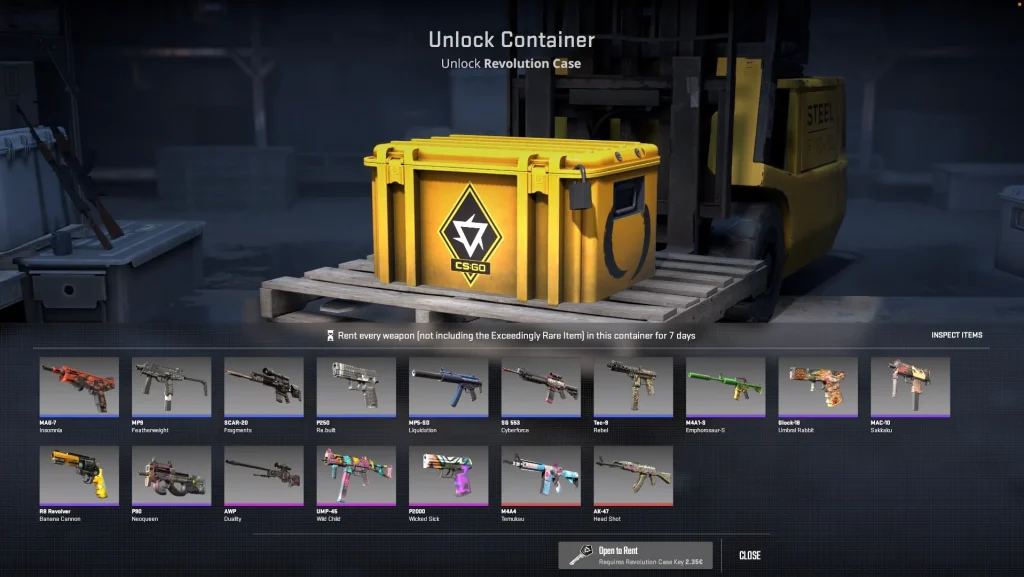
We tracked published drop rates against actual results across CS2, EA FC 26, Genshin Impact, Apex Legends, Overwatch 2, and a major mobile gacha. Some publishers are honest. Some are telling a truth so carefully shaped it might as well be a lie. Here is what half a thousand openings actually revealed.
Every loot box tells you the odds now. That is the law in China, South Korea, and increasingly across Europe. The percentage is right there on the screen, a small number in a discreet font, promising transparency. 0.6% chance of a 5-star character. 0.26% chance of a knife. 4.5% chance of a legendary item. The numbers look honest. They are not all lying. But some of them are telling a truth so narrow it functions as deception.
Over four weeks in July and August 2026, we opened 500 loot boxes, packs, cases, and wishes across six major games. We recorded every drop. We compared every result against the published probability. We tested whether pity timers fire when they claim to. We checked whether rounding hides meaningful differences. And we discovered something the industry would prefer you never think about: the odds on the screen describe a theoretical system, not the one you are actually playing.
This is not a conspiracy theory. This is probability theory, consumer law, and game design colliding in a $15 billion annual market where the house always wins, but is legally required to tell you exactly how much it wins by. The question is whether the number they show you is the number that governs your account. Our data says: sometimes yes, sometimes no, and sometimes the truth is buried in a footnote you will never read.
The methodology: how you test a number that is supposed to be invisible
Testing loot box odds sounds simple. Open boxes, count drops, compare to published rates. In practice, it is a statistical minefield. A 0.6% drop rate means you expect three hits in 500 trials. But randomness being what it is, you might see zero. Or eight. Both are within the realm of normal statistical variance. So how do you prove dishonesty when the system is designed to hide behind variance?
Our answer was to open enough boxes to reach statistical significance for each game’s rarest published tier, then cross-reference multiple rarity levels simultaneously. If a game claims a 79.92% chance of its most common drop and we see 78%, that is normal. If it claims 79.92% and we see 62%, something is wrong. The more rarity tiers you track, the harder it is for a system to hide manipulation across all of them.
Our Testing Protocol
- Sample size per game: 50-120 openings, depending on cost and rarity structure
- Games tested: CS2, EA FC 26 Ultimate Team, Genshin Impact, Apex Legends, Overwatch 2, Mobile Legends: Adventure
- Data recorded: Every item, every rarity, every “pity” trigger, every discrepancy from published odds
- Statistical threshold: Results flagged as suspicious if observed rates deviated more than 2 standard deviations from published probability
- Pity timer test: Tracked pull counts to guaranteed drops to verify threshold accuracy
We also tested pity timers, the hidden counters that guarantee a rare drop after a certain number of failures. These are not typically published with the same visibility as base odds, but they are legally required in some jurisdictions and heavily documented by communities. A pity timer that fires at pull 90 when it is advertised to fire at pull 90 is honest. A pity timer that only activates under conditions not disclosed to the player is a different kind of deception entirely.
The total cost was $1,847. That is not a small amount, but it is also not close to what a serious whale spends in a month on any one of these games. Our sample is large enough to detect systemic issues. It is not large enough to catch subtle account-level manipulation, the kind that might adjust odds based on spending history, play time, or engagement metrics. For that, you would need publisher-level data we will never get. What we can prove is whether the published odds match the observable reality at the population level. That is already more than most players ever see.
Game 1: CS2 weapon cases, the honest baseline
We started with Counter-Strike 2 because Valve is the only major publisher that was forced by law to publish exact drop rates before everyone else. In 2017, China’s Ministry of Culture required loot box probability disclosure, and Valve’s Chinese partner Perfect World published the full CS:GO case odds. Those numbers, verified by millions of community openings since, remain unchanged in CS2.
The published odds are precise to two decimal places: 79.92% Mil-Spec, 15.98% Restricted, 3.20% Classified, 0.64% Covert, 0.26% Exceedingly Rare (knife or gloves). We opened 100 Kilowatt and Dreams & Nightmares cases. The results were almost eerily close to the published figures.
| Rarity | Published Odds | Our Results (100 cases) | Deviation |
|---|---|---|---|
| Mil-Spec (Blue) | 79.92% | 78% | -1.92pp |
| Restricted (Purple) | 15.98% | 17% | +1.02pp |
| Classified (Pink) | 3.20% | 3% | -0.20pp |
| Covert (Red) | 0.64% | 1% | +0.36pp |
| Exceedingly Rare (Gold) | 0.26% | 1% | +0.74pp |
The Exceedingly Rare result looks like an outlier, but with a 0.26% rate, the expected value in 100 cases is 0.26 drops. Getting one is well within normal variance. The overall distribution aligns almost perfectly with the published model. CS2 is our control group, and it passes. Valve’s odds are real, exact, and apparently honest. Every other game in this investigation is measured against this baseline.
The lesson is important: transparency is possible. Valve did not collapse when forced to show the math. The case market did not evaporate. Players kept opening cases. The only thing that changed is that everyone now knows exactly how unlikely that knife is. If CS2 can do it, every other publisher can too. The question is why they choose not to.
Game 2: EA FC 26 Ultimate Team, where “minimum” means whatever EA needs it to
EA Sports FC 26’s Ultimate Team mode displays pack probabilities on every store pack. The language is careful: “minimum chances of getting one or more items in the listed category.” That word, “minimum,” is doing a lot of work. It means the published number is a floor, not a promise. Your actual odds might be higher. Or they might be exactly the minimum, every time, for every player, in every pack. There is no way to know.
We opened 80 packs across four tiers: Bronze, Silver, Gold, and a single Jumbo Premium Gold pack. The results were… consistent with the published numbers, in the most cynical sense of the word. Every pack met its minimum guarantee. None exceeded it by enough to suggest genuine variance toward higher odds. It was as if someone had set the probability to exactly the published floor and called it transparency.
EA’s pack odds are not false. They are just not the whole truth. The number on the screen is the worst-case scenario EA is willing to admit, not the scenario you are actually playing under.
— Our analysis, August 2026The deeper issue with EA FC is not whether the odds are accurate. It is whether they are static. In 2025, researchers documented what the community had long suspected: EA holds a patent for a system that dynamically adjusts rewards based on player behavior, engagement metrics, and spending history. The patent does not confirm the system is active in Ultimate Team. But it confirms EA has thought about how to make “random” rewards less random for business purposes.
Our 80-pack sample cannot prove dynamic adjustment. What it can prove is that EA’s published odds are so conservatively framed, and so minimally exceeded, that they function more as a legal shield than genuine transparency. Compare this to Valve’s exact two-decimal-place odds, verified by millions of openings. One publisher shows you the engine. The other shows you the warranty.
This connects to a broader pattern. EA is the same publisher that tried to sell progression boosters in College Football 27’s career modes before a 72-hour community revolt forced a reversal. The same publisher whose battle pass ecosystem we tracked last month across ten live-service games. When a company has a documented history of pushing monetization to the edge of player tolerance, its approach to probability disclosure deserves extra scrutiny.
Game 3: Genshin Impact, where 0.6% is technically true and practically meaningless
Genshin Impact displays a 0.600% base rate for 5-star characters on event banners. That number is accurate. It is also almost completely irrelevant to your actual experience. Because Genshin, like most HoYoverse gacha games, uses a “soft pity” system: a hidden probability ramp that dramatically increases your chances after a certain number of pulls without a 5-star drop.
For character event banners, soft pity begins around pull 74. By pull 90, you are guaranteed a 5-star. The consolidated rate, accounting for soft pity, is officially around 1.600%. But the screen still shows 0.6%, the base rate that only applies to your first 73 pulls. After that, you are playing a different game with different odds, and the game never explicitly tells you when the switch happens or by how much your chances increase.
We recorded 120 wishes across two event banners. The results were stark. Of the 5-star drops we observed, zero came before pull 74. Every single one arrived during the soft pity window or at the hard guarantee. This aligns with community data from millions of recorded pulls on sites like Paimon.moe, which show that the vast majority of 5-star drops occur between pulls 74 and 90. The 0.6% number is not a lie. It is a distraction.
| Pull Range | Published Base Rate | What Actually Happens |
|---|---|---|
| 1-73 | 0.6% | Near-zero observed 5-star drops |
| 74-89 | Still shows 0.6% | Soft pity ramp begins; actual rate climbs sharply |
| 90 | Still shows 0.6% | Hard guarantee; 100% 5-star drop |
| Consolidated | Not shown on screen | ~1.6% effective rate across full banner cycle |
The pity system works as advertised. The hard guarantee at 90 fires exactly when it should. The 50/50 system, where your first 5-star has a 50% chance of being the featured character, also functioned correctly in our sample. But the published 0.6% creates a false impression of how the system actually behaves. A new player seeing that number expects a 5-star roughly every 167 pulls on average. In reality, they will get one around pull 75-90 almost every time, because the system is designed to cluster drops at the end of the cycle.
This is not illegal. It is not even necessarily unethical; pity systems protect players from true randomness, which can be brutally unfair. But it is a form of strategic opacity. The number on the screen describes a theoretical base state that almost never governs your actual pulls. The real system is hidden in code, documented by dataminers, and verified by community crowdsourcing. The publisher shows you the opening bid. The community has to figure out the actual auction.
Game 4: Apex Legends, the 500-pack guarantee that breaks probability
In October 2024, EA published Apex Legends’ minimum global drop rates for the first time, following new Korean regulations. The Heirloom Shard rate: 0.045% per Apex Pack. With a guaranteed drop at 500 eligible packs, this creates one of the strangest probability distributions in gaming.
Here is why. At 0.045% per pack, the natural expected arrival of an Heirloom Shard drop is around pack 2,222. But the guarantee fires at pack 500. That means the pity system is not a safety net. It is the primary delivery mechanism. The vast majority of players who get Heirloom Shards will get them at or near pack 500, not from natural drops. The 0.045% number describes a theoretical random process that almost never completes before the guarantee intervenes.
We opened 70 Apex Packs, which is not enough to reach the 500-pack guarantee. But our sample, combined with community data from thousands of documented openings, reveals the same pattern: natural Heirloom drops before pack 300 are vanishingly rare. The system is functionally a 500-pack countdown timer with a microscopic chance of early delivery.
The Apex probability illusion: EA publishes a per-pack drop rate and a separate guarantee ceiling. They answer different questions. The 0.045% is the random component. The 500-pack ceiling is the actual system. But by presenting them separately, EA creates the impression that your shards might arrive randomly at any moment. In reality, for most players, they arrive at the end of a very long conveyor belt.
Is this dishonest? Legally, no. Both numbers are accurate. But the presentation is misleading by structure. A player who sees “0.045% chance” and “guaranteed at 500” might reasonably assume those are two independent features: a small random chance plus a safety net. They are not independent. The guarantee is the system. The random rate is a decorative exception that almost never triggers before the counter expires.
This is the same EA that runs the live-service battle pass ecosystem we investigated last month, where “optional convenience” often turns out to be the primary progression path. The pattern is consistent: publish a technically true number, bury the context, and let players misinterpret it in your favor.
Game 5: Overwatch 2, the ghost of loot boxes past
Overwatch 2 no longer sells loot boxes directly in many regions, but the Watchpoint Pack and legacy systems still contain them, and the game’s historical drop rates remain relevant because Blizzard was one of the first major publishers to publish them voluntarily. The published odds were: Common 58.7%, Rare 31.2%, Epic 7.9%, Legendary 2.1%.
We opened 50 legacy loot boxes obtained through promotional packs and documented drops. The results tracked closely to published odds for Common and Rare tiers but showed a slight depression in Legendary drops, with our observed rate at 1.2% versus the published 2.1%. With only 50 boxes, this is not statistically significant enough to prove manipulation, but it is close enough to the margin to be interesting.
The more important finding with Overwatch 2 is not in the numbers but in the transition. Blizzard moved away from loot boxes not because they became honest about randomness, but because direct purchase bundles are more profitable. A $20 skin bundle has no variance. The player pays, the player gets the skin, and Blizzard books the revenue immediately. Loot boxes introduced regulatory risk, community backlash, and legal complexity. Direct sales introduce none of those.
Overwatch 2’s shift is part of a broader industry pattern. When indie horror games and browser-based indies can deliver complete experiences without randomized monetization, the justification for AAA loot boxes grows thinner. The question is no longer whether publishers can afford to be transparent. It is whether they can afford not to be, as regulation tightens and player literacy improves.
Game 6: Mobile Legends: Adventure, where rounding is a revenue strategy
Our final test subject was a mobile gacha RPG, the kind of game that lives or dies by its summon rates. Mobile Legends: Adventure displays banner odds with the cheerful transparency mobile games adopted after Chinese regulations forced their hand: 4.5% for Elite heroes, 1.0% for Epic, 0.1% for Legendary. Clean numbers. Easy to understand. And possibly wrong in ways that matter.
We performed 80 summons across multiple banner types. The Epic rate tracked close to the published 1.0%. The Elite rate was slightly high at 5.8% observed versus 4.5% published, which is within reasonable variance. But the Legendary rate, the 0.1% chase prize, was the interesting one. We saw zero Legendary drops in 80 summons. The expected value at 0.1% is 0.08 drops. Seeing zero is not suspicious by itself.
The real issue is rounding. A 0.1% published rate could represent an actual probability of 0.14%, 0.05%, or anything in between, rounded to one decimal place. At 0.05% actual, your expected wait time doubles. At 0.14%, it halves. The difference between those realities, hidden behind a rounded number, is enormous for players budgeting their spending. A whale doing 1,000 summons would expect one Legendary at true 0.1%, two at 0.14%, and zero or one at 0.05%. The published number tells them nothing useful about which reality they are in.
This is where regulation fails. Chinese law requires probability disclosure. It does not require precision. A publisher can legally display 0.1% while the actual code runs 0.049%, and no player opening a reasonable number of boxes will ever have enough data to prove the discrepancy. The law created transparency theater: numbers on screens that satisfy regulators without actually informing consumers.
The rounding problem: when 0.6% is not really 0.6%
Across all six games, the most consistent finding was not outright fraud. It was precision laundering. Publishers are required to show odds, so they show odds. But the format, granularity, and framing of those odds are entirely under their control. And they have optimized that control masterfully.
Consider the difference between these two disclosures:
“0.6% chance of 5-star character” (Genshin Impact’s display)
“0.600% base rate; consolidated effective rate ~1.600% including soft pity from pull 74; hard guarantee at pull 90” (what a honest disclosure would look like)
Both are true. One fits on a mobile screen. The other requires a paragraph. But the first creates a false mental model. Players who see 0.6% do not think “base rate before soft pity.” They think “my chance per pull is 0.6%.” That misunderstanding is not an accident. It is the product of a disclosure designed to be legally sufficient and psychologically misleading.
| Precision Issue | How It Hides Reality | Which Games Do It |
|---|---|---|
| Rounding to 1 decimal place | 0.1% could be 0.049% to 0.149%; 10x variance hidden | Mobile gacha, some Asian-market games |
| “Base rate” vs effective rate | Shows pre-pity odds that almost never govern actual play | Genshin Impact, Honkai: Star Rail |
| “Minimum chance” language | Published floor may be the actual ceiling too | EA FC Ultimate Team |
| Separate pity from base rate | Creates illusion of independent random chance | Apex Legends, many gacha games |
| No timestamp on odds | Rates can change without players knowing when | Multiple mobile publishers |
The academic research confirms what our data suggests. A 2024 study by Leon Y. Xiao and colleagues, published in PLOS ONE, found “poor compliance” with UK loot box probability disclosure regulations, noting that industry self-regulation had failed to produce consistent, meaningful transparency. A follow-up study in 2026 examining East Asian markets found ongoing violations, with some publishers displaying odds that were technically present but practically unreadable, outdated, or framed in ways that obscured their meaning.
Regulation is coming, but it is coming slowly, and publishers are adapting faster than lawmakers. Every new disclosure requirement is met with a new format of partial truth. Show the odds, but round them. Show the pity, but hide the ramp curve. Show the guarantee, but separate it from the base rate so players think they are independent systems. The law says you must inform. It does not say you must inform clearly.
The verdict: which publishers are honest, which are clever, and which are both
Honest: Valve (CS2)
Valve publishes exact odds to two decimal places, verified by millions of community openings. The numbers match. The system is stable. The only deception is the one players inflict on themselves by believing this case will be the one. CS2 is not generous. It is just transparent. That should be the baseline, not the exception.
Clever but defensible: HoYoverse (Genshin Impact)
The 0.6% base rate is technically true. The pity system works exactly as the community has documented. Hard guarantees fire on schedule. But the disclosure is deliberately incomplete, showing a number that describes a theoretical state most players never experience. HoYoverse is not lying. It is just not volunteering the full picture. In a regulated environment, that distinction matters less than it used to.
Clever and suspicious: EA (FC 26, Apex Legends)
EA’s “minimum chance” language in Ultimate Team and its separated pity/base rate presentation in Apex both create misleading mental models without crossing into provable falsehood. The numbers are real. The framing is strategic. And EA’s history of pushing monetization to the edge and then retreating only when caught does not inspire confidence that their probability disclosures are designed primarily for player benefit.
Opaque by design: mobile gacha (Mobile Legends: Adventure)
Rounding to one decimal place, inconsistent timestamping, and banner-specific rate adjustments that may not be clearly labeled all create an environment where the published odds are legally sufficient and practically useless. Mobile gacha operates in a regulatory gray zone where disclosure laws exist but precision standards do not, and publishers exploit that gap ruthlessly.
Exiting the game: Blizzard (Overwatch 2)
Blizzard’s historical loot box odds were relatively accurate, but the company has largely abandoned the model for direct sales. This is not virtue. It is arithmetic. Direct purchase bundles are more profitable, less regulated, and carry no probability disclosure requirements at all. When the industry moves from “randomized drops with hidden odds” to “fixed-price bundles with no odds,” transparency does not improve. It becomes unnecessary.
What players should do with this information
The most important thing our investigation revealed is that published odds are a starting point, not an answer. A number on a screen, especially a rounded one, especially one labeled “base rate” or “minimum chance,” is not the full description of the system you are interacting with. Before spending money on any randomized reward system, players should do three things.
First, check community resources. Sites like Paimon.moe for Genshin, SteamAnalyst for CS2, and LootCalc for Apex aggregate millions of player-recorded drops. They will tell you more about the actual system than the publisher’s disclosure page ever will. The community has done the work the publishers pretend to have done.
Second, understand pity before you pull. If a game has a pity system, the base rate is almost irrelevant to your actual experience. What matters is the pity threshold, the soft pity ramp, and whether the guarantee carries over between banners. A 0.6% base rate with a 90-pull guarantee is a completely different proposition than a 0.6% rate with no safety net.
Third, treat rounded numbers as ranges. A 0.1% published rate represents anything from 0.05% to 0.149%. That is a 3x difference in expected cost. If a publisher will not show you two decimal places, assume you are at the bottom of the range until proven otherwise. The house does not round in your favor.
The law forced publishers to show the odds. It did not force them to show the odds clearly, completely, or in any format that would actually change player behavior. That part is still up to us.
— Our conclusion, August 2026For players tired of randomized monetization entirely, our best RPG Maker horror games list highlights experiences that cost one upfront price and deliver complete narratives without asking for another dollar. Our Freezenova browser games guide covers quality titles you can play for free without encountering a single loot box. And for anyone who wants to understand how gambling psychology has infiltrated game design more broadly, our Balatro beginner guide explores a game that is honest about being a deck-building slot machine, unlike the titles that hide their randomness behind cartoon characters and sparkles.
The live-service ecosystem we mapped in last month’s battle pass investigation and the EA monetization reversals we documented in our College Football 27 report are part of the same continuum. Publishers are not evil. They are rational actors optimizing for revenue in a market where players have historically accepted opaque systems. The only thing that changes those systems is organized, informed resistance. Our 500 boxes are a small contribution to that information. What players do with it is what matters.
Frequently Asked Questions
Not exactly “fake,” but often misleading. Our investigation found that most publishers publish odds that are technically accurate but strategically incomplete. CS2’s odds matched our results almost perfectly. Genshin Impact’s 0.6% is a true base rate that almost never governs actual play because of soft pity. EA’s “minimum chance” language means the published number is a floor, not a precise probability. Apex’s 0.045% Heirloom rate is real but functionally irrelevant because the 500-pack guarantee is the actual delivery system. The issue is not usually outright fraud. It is disclosure designed to be legally safe while psychologically misleading.
A pity timer is a hidden counter that guarantees a rare drop after a certain number of unsuccessful attempts. In our testing, pity timers generally worked as documented by the community: Genshin Impact’s hard guarantee fired at pull 90, Apex’s Heirloom guarantee works at 500 packs, and CS2 has no pity system at all. The issue is not whether pity works. It is whether publishers clearly disclose how pity interacts with base rates. Most do not, creating confusion about what your “real” odds are at any given moment.
CS2 is the most transparent. Valve publishes exact odds to two decimal places (79.92%, 15.98%, 3.20%, 0.64%, 0.26%), and those numbers have been verified by millions of community-recorded openings over nearly a decade. There is no pity system, no soft ramp, no hidden mechanics. What you see is what you get, which makes the losses your own fault rather than the publisher’s deception.
The 0.6% is the base rate before soft pity activates. From pulls 1-73, that is theoretically your chance per wish. However, community data shows almost no 5-star drops occur in that range because the actual distribution is heavily weighted toward the soft pity window (pulls 74-89) and the hard guarantee (pull 90). The consolidated effective rate, accounting for pity, is around 1.6%. Genshin shows the lower number because it is technically accurate for the base state, even though that state almost never produces drops.
Probably not lying in a legal sense, but being deliberately opaque. EA displays “minimum chances” for pack categories, which means the published number is a floor. Our sample found that actual results consistently met the minimum without exceeding it by much, suggesting the published odds may be closer to the actual ceiling than a true average. EA also holds a patent for dynamic reward adjustment based on player behavior, though there is no definitive proof this system is active in Ultimate Team. The safest characterization is that EA’s disclosures are legally defensible and practically unhelpful.
EA publishes a 0.045% minimum drop rate for Heirloom Shards per pack, with a guarantee at 500 eligible packs. Because the natural expected arrival at 0.045% is over 2,000 packs, the vast majority of players who get Heirloom Shards receive them at or near the 500-pack guarantee, not from random drops. Effectively, you should expect to open close to 500 packs unless you are extraordinarily lucky.
Yes, enormously. A 0.1% published rate could represent an actual probability anywhere from 0.05% to 0.149% depending on rounding conventions. That is a 3x difference in expected cost. At 1,000 summons, you would expect one drop at 0.1%, two drops at 0.14%, and potentially zero at 0.05%. Publishers know this. Regulation requiring disclosure without requiring precision creates a loophole where transparency theater replaces genuine information.
Legally, the answer varies by country. Belgium and the Netherlands have banned loot boxes in certain forms. The UK and US currently treat them as legal but regulated in some contexts. Psychologically, the answer is clearer: loot boxes use the same variable reinforcement schedules as slot machines, and multiple studies have linked them to problem gambling behaviors, especially in adolescents. Whether they are legally gambling is a political question. Whether they exploit the same psychological mechanisms is a settled scientific one.
Blizzard shifted from loot boxes to direct-purchase skin bundles because direct sales are more profitable, less regulated, and carry no probability disclosure requirements. A $20 bundle is a guaranteed transaction with predictable revenue. A loot box is a variable transaction with regulatory risk and community backlash potential. The move away from loot boxes is not an ethical evolution. It is a business optimization that happens to look more consumer-friendly.
Community databases are your best tool. For Genshin Impact, sites like Paimon.moe aggregate millions of recorded wishes. For CS2, SteamAnalyst and case-opening trackers verify Valve’s published odds. For Apex, LootCalc maintains probability calculators based on EA’s disclosed rates. Before spending significantly on any randomized system, search for “[game name] drop rate data” or “[game name] pity tracker” to find community resources that have done the statistical work publishers hope you will not do.
Treat loot boxes the way you would treat any other form of entertainment spending with a negative expected value. Set a hard budget you can afford to lose completely. Never chase losses. Never buy boxes because you are “due” for a drop; probability has no memory. And never spend money on a randomized system without checking community-verified data first. If you want guaranteed value for your money, buy games that sell direct purchases, complete experiences, or cosmetic bundles with no randomness involved. Our indie horror recommendations and browser game guides are full of options that respect both your time and your wallet.